Our tincture library
2 fl oz · roughly 60 dropperfuls · subscribable at 15% off
Filter
3 products
Clinical weight-to-volume · Grown in Umpire, AR
Precise, reproducible herbal medicine in organic cane alcohol, calibrated weight-to-volume ratios, not the folkloric fill-a-jar method. For nervous-system support, sleep, and recovery.
New to tinctures? Read the full guide →2 fl oz · roughly 60 dropperfuls · subscribable at 15% off
There are two ways to make an herbal tincture. The first, sometimes called the “folk method”, is what most kitchen herbalists do: pack a jar with herb, cover it with vodka, wait a month, strain. The strength varies wildly from jar to jar depending on how tightly you packed, how moist the herbs were, how fresh the vodka, how long it sat. It's gentle medicine, and it has its place, but you can't dose with confidence from a folk tincture because you don't know what's in it.
The second way is the clinical-herbalist standard: weight-to-volume. You weigh the herb. You measure the menstruum, the alcohol-and-water solution that will extract the plant's chemistry. You maintain a precise ratio calibrated to that specific herb, typically tighter for fresh-plant tinctures and more expansive for dried or heavier-hitting botanicals. The extraction sits for four to six weeks with daily agitation, then gets pressed through a tincture press that squeezes every last drop out of the marc. Every bottle in a batch is the same strength, reproducibly.
Every tincture on our shelf is made this way. The alcohol is organic cane-sugar ethanol (food-grade, pesticide-free). The herbs are grown in Gaia's Umpire medicine garden. The maceration happens in glass, in the dark, where sunlight can't degrade the compounds. And the math is the math, you know what you're taking.
Decision helper
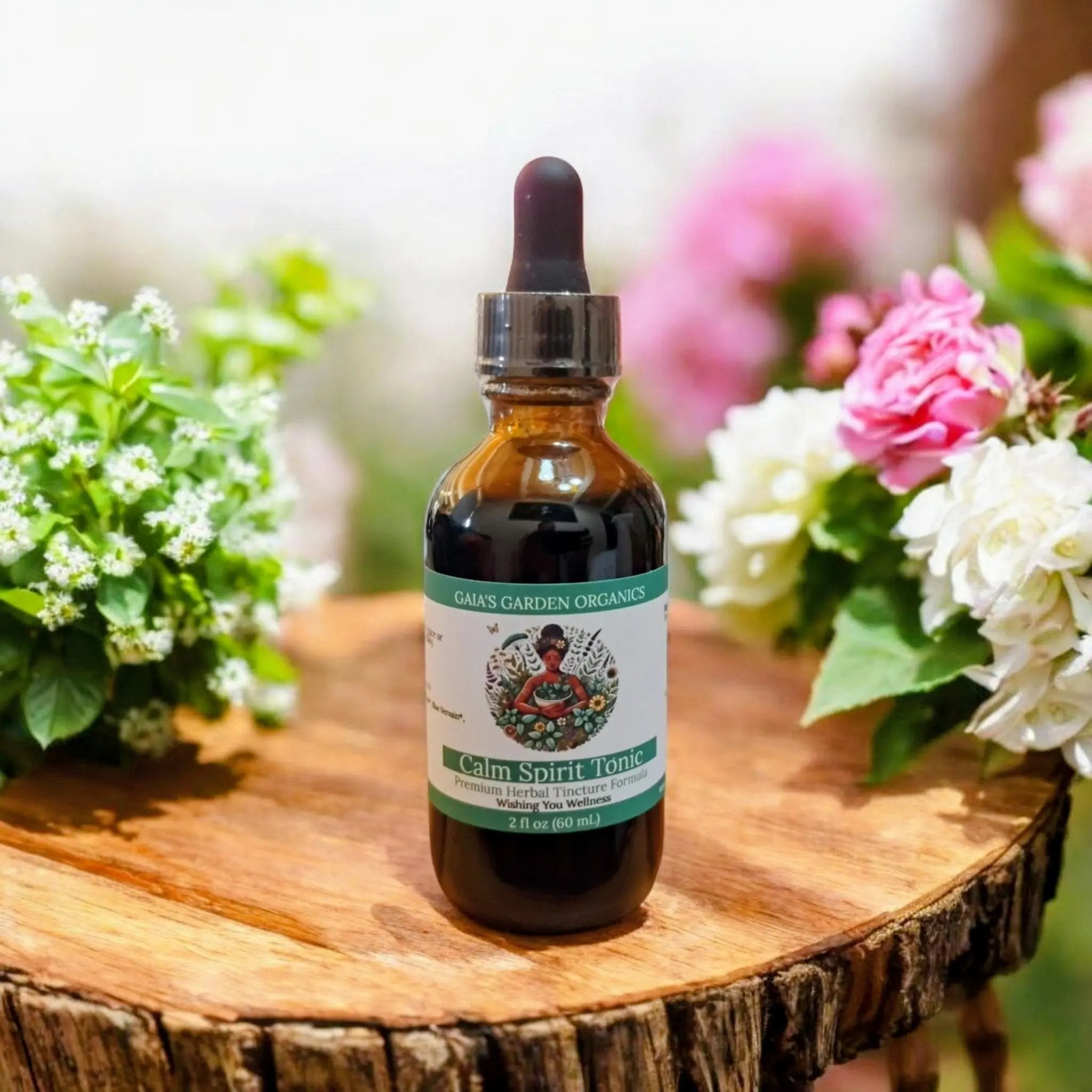
“A racing mind, a tight jaw, the 3 PM crash”
→ Calm Spirit Tonic
Daytime nervous-system softening, a dropperful before a stressful meeting or during an afternoon crash. Doesn't sedate, just lowers the edge.
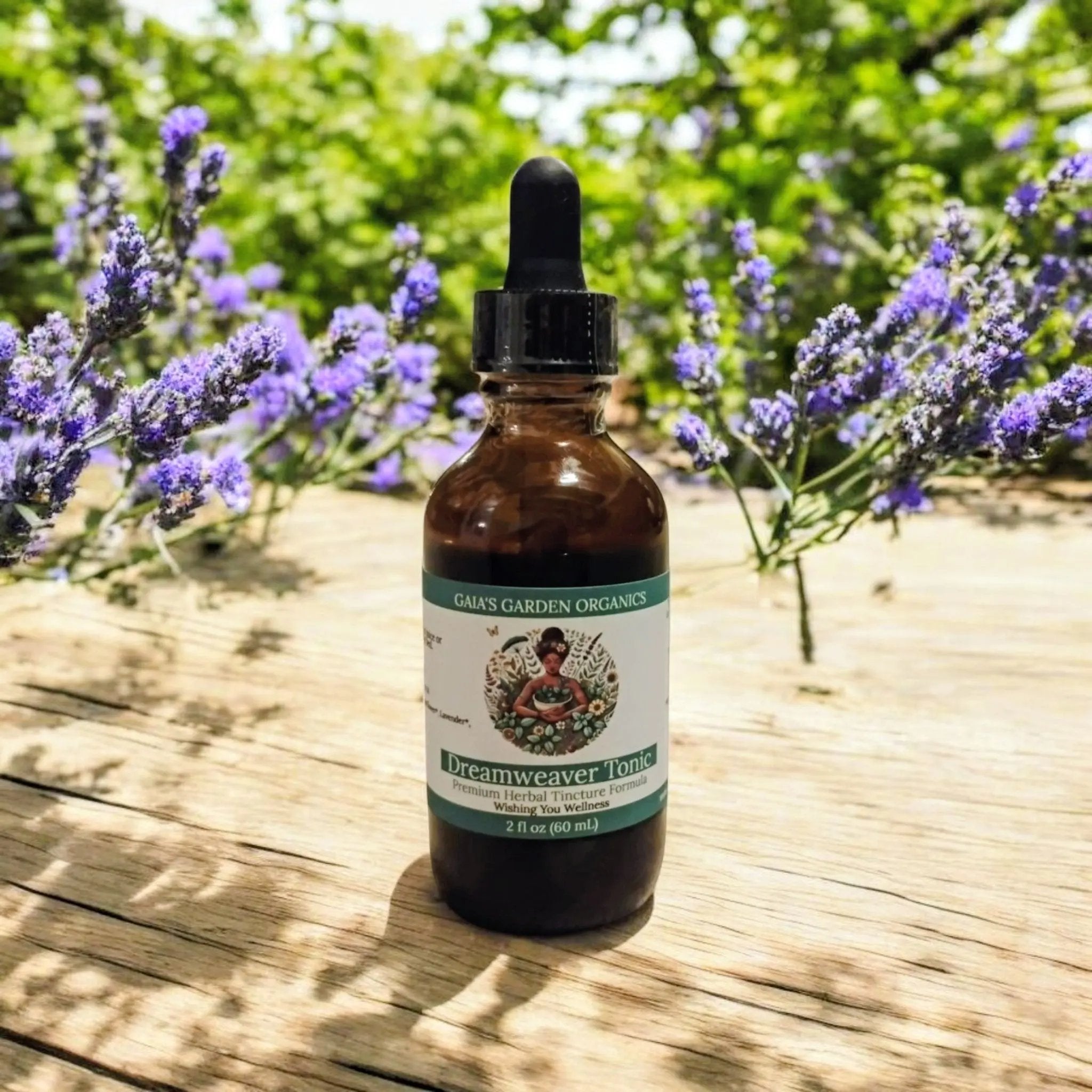
“Falling asleep is hard, or staying asleep is hard”
→ Dreamweaver Tonic
A bedtime tincture for the over-tired and under-rested. Works best taken 45-60 minutes before you want to be asleep.
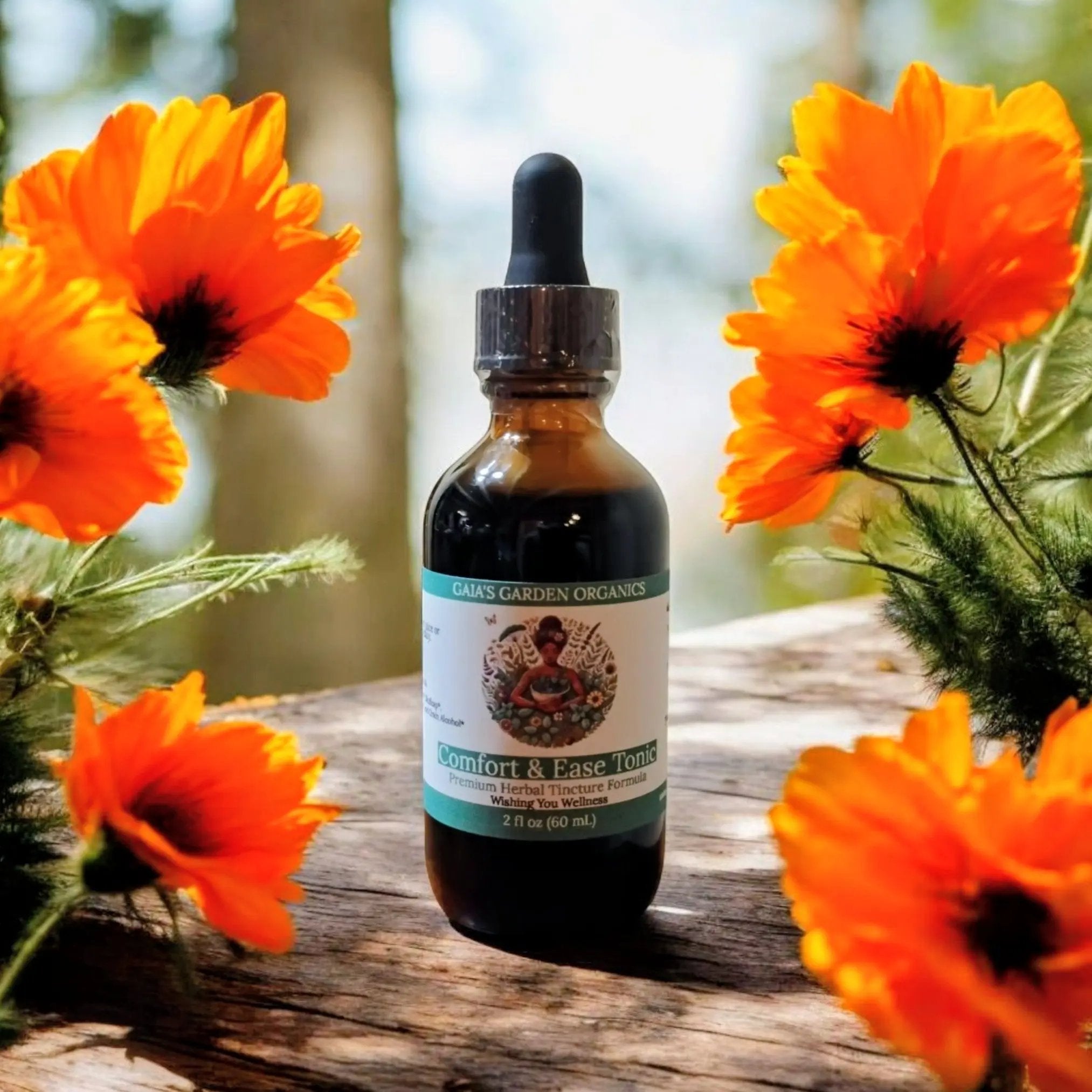
“Sore, tense, recovering from physical strain”
→ Comfort & Ease Tonic
For muscle tension, minor aches, post-workout recovery, and the nervous-system component of chronic physical discomfort.
“The full nervous-system reset”
→ The 30-Day Calm Reset Kit
Tranquility Essence + Dreamweaver Tonic + Healing Hypnotic Tea, the anxiety-and-sleep protocol we recommend most, bundled at 15% off.
One dropperful (about 30 drops) in a small amount of water, 2-3 times daily. Under-tongue hold for 15-20 seconds for fastest absorption.
For an active panic moment, post-trauma support, or sleepless night, a dropperful can be repeated every 20-30 minutes for 2-3 doses, then return to the standard schedule.
Add the dropperful to 2 oz of just-boiled water and wait two minutes before drinking, this flashes off the alcohol without damaging the extract.
Tinctures pair with each other, with flower essences, with tea, and with your vet/doctor's care plan. Tell your prescriber about every tincture in rotation.
| Tincture | Flower essence | Tea | |
|---|---|---|---|
| Works on | The physical body, nervous system, digestion, circulation, muscles. | The emotional / subtle-energy layer. No chemical action. | The body, gently, ritual plus mild physical effect. |
| Onset | 20-30 minutes | Hours to days (cumulative) | Minutes, while you sip |
| Dose | 1 dropperful, 2-3× daily | 4 drops, 1-2× daily | 1 cup, 1-3× daily |
| When to reach for it | Acute or chronic physical state, sleep, anxiety with body tension, pain. | Stuck emotional pattern, grief, fear, confidence, rescue-pet adjustment. | Daily ritual support, warmth, digestion, immunity, winding down. |
A weight-to-volume (w/v) tincture has a precise, reproducible ratio of herb to alcohol menstruum, calibrated per herb based on whether it's fresh or dried, how potent the constituents are, and how the plant gives up its medicine. Each of our tinctures is made at the clinical w/v ratio that herb calls for, not a one-size-fits-all formula. This matters because without a known ratio, you can't dose with confidence. A "folk method" tincture made by eyeballing the herb and covering with booze can vary 3x or more in strength bottle-to-bottle. Weight-to-volume gives you a consistent, predictable dose every time, which is the clinical herbalist's standard.
Tinctures absorb faster than capsules (they enter the bloodstream sublingually when held under the tongue), last longer than teas on the shelf, and require no brewing. Alcohol extraction also pulls out plant compounds, alkaloids, resins, glycosides, that water alone cannot. For nervous-system work especially, where you want a reliable 20-30 minute onset, tinctures are hard to beat.
One dropperful (about 30 drops, roughly 1 mL) in a little water, 2-3 times daily, is our standard. Squeeze the bulb, squirt under the tongue, hold for 15-20 seconds, then swallow. The taste is part of the medicine, bitter, aromatic, and grounding. If alcohol on the tongue is uncomfortable, put the drops in a small amount of hot water and let it cool briefly; this flashes off some of the alcohol without damaging the extract.
One full dropperful of a clinical-strength herbal tincture contains a small amount of organic alcohol, roughly the same as what's naturally produced in a ripe banana. Putting it in hot water reduces it further. For people avoiding alcohol entirely (pregnancy, sobriety, religious reasons), we recommend our herbal teas or flower essences instead, though flower essences are also brandy-preserved, the dose is much smaller.
Yes, clinical herbalists often combine tinctures to address layered concerns. Calm Spirit and Dreamweaver pair beautifully (daytime nervous-system softening plus bedtime sleep support); Comfort & Ease can overlap with either. Put both dropperfuls in the same glass of water. Always tell your healthcare provider about every tincture you're using alongside prescriptions.
For acute support (a panic moment, a bad night's sleep), a dropperful of Calm Spirit or Dreamweaver usually lands within 20-30 minutes. For baseline nervous-system rebuilding, effects accumulate over 2-4 weeks of daily use, the body begins to reset rather than just patch the symptom. Consistency is the lever.
A 2 fl oz (60 mL) tincture contains roughly 60 dropperfuls, about 3-4 weeks at 2-3 doses daily, or around two months if you're using it once a day. That's why we built Subscribe & Save: set-and-forget 15% off, every month, so you're never reaching for an empty bottle mid-storm.
Many of the herbs in our tinctures are traditionally considered safe during pregnancy and nursing, but not all, and not for everyone. Always check with your midwife, ob-gyn, or clinical herbalist before starting a new tincture if you are pregnant, nursing, or trying to conceive.