In this article (12)▾
The Bach Method: Why We Preserve Flower Essences in Brandy and Mountain Water
What Dr. Edward Bach discovered ninety years ago — and why the original preservation method remains the clinical gold standard for shelf-stable plant medicine.
In this piece I'll walk you through how a flower essence is actually made, why brandy and mountain water are the correct carrier, what the alternatives look like in practice, and what that means for the bottle on your shelf. If you've been using flower essences for years, some of this will be familiar. If you're new, this is the background that makes the rest of flower-essence work sensible.
A brief history of the Bach method
Dr. Edward Bach was an English physician and homeopath in the 1920s and early 1930s. He had already built a respected Harley Street practice treating chronic illness with bacterial nosodes when he became convinced that emotional states were the true ground of physical illness — that fear, grief, indecision, and resentment were the underlying patterns that pharmaceutical medicine was merely chasing.
In 1930 he left his London practice and moved to the Welsh countryside to develop a new kind of remedy: one made directly from flowering plants, gentle enough to act on emotional states without chemical side effects, and prepared so simply that any careful person could make their own. Over the next six years, before his death in 1936, he identified and prepared thirty-eight flower essences. Each was made the same way:
- Collect the flowers at peak bloom on a sunny morning, ideally from a single undisturbed plant stand.
- Float them on the surface of a bowl of clean spring water.
- Leave the bowl in direct sunlight for three to four hours — the flowers transfer their energetic imprint to the water through the warmth and light.
- Carefully remove the flowers, and preserve the charged water by mixing it one-to-one with brandy.
That's it. No chemical extraction, no fermentation, no infusion of physical plant material into the final remedy. The finished essence contains almost no measurable plant chemistry — just water that has been imprinted by the living flower and stabilized for shelf life.
The Bach protocol has been used, unchanged, by thousands of practitioners for nearly a century. It's a rare example of a clinical method that has needed no refinement.
Why brandy, specifically
Brandy isn't an arbitrary choice — and it isn't a tradition kept for nostalgia. It's a pharmacologically correct preservative for a water-based, vibrationally-imprinted remedy. Here's why it became the standard, and why I've chosen to stay with it:
- It's a spirit, not a fortified wine. Brandy is distilled from wine, which means it contains alcohol without the sugars, tannins, and polyphenols that would otherwise carry their own biochemical and energetic signatures into the essence. The flower's imprint is preserved cleanly, without being layered on top of a strong botanical character.
- It preserves water indefinitely. Mountain water that's been warmed in the sun is a perfect environment for microbial growth. The brandy — typically bringing the final alcohol content of the stock bottle to around 25–27% — arrests that microbial activity completely. A properly made flower essence has a shelf life measured in decades, not years.
- It's historically stable. Cognac and other brandies have been produced the same way for centuries. Unlike a modern industrial solvent, a vintage of brandy made today is chemically very close to a brandy made a hundred years ago — which means the Bach method is reproducible across generations without drift.
- It carries tradition without carrying substance. Because a full working dose of a Bach-made essence is four drops four times a day, the total alcohol reaching the body is vanishingly small. The taste is a whisper; the alcohol content is a trace.
- It pairs with mountain water. Bach was specific about the water, too. Spring water from a living source — flowing, mineral-rich, untouched by industrial processing — was the vessel. We source our water from the Ouachita foothills of Arkansas, the same high-mineral terrain Bach would recognize if he were still preparing essences today.
The glycerin question
The most common alternative to brandy on the flower-essence market today is vegetable glycerin. I want to be honest about this, because it's a question I'm asked often.
Glycerin is a thick, sweet, water-soluble preservative derived from plant oils. It's marketed as a modern, child-friendly, alcohol-free alternative. The argument made for it is simple: it preserves the water, it tastes slightly sweet, and it removes the trace of alcohol. For families giving essences to small children or for adults in recovery, that can sound appealing.
From a clinical perspective, though, glycerin is a compromise, not an upgrade. Here's why:
- It carries its own energetic and biochemical signature. Glycerin is a viscous, sweet substance with distinctive sensory and pharmacological character. It doesn't disappear into the background the way distilled brandy does.
- Its preservative effect is weaker. Glycerin preserves against microbial growth only at relatively high concentrations (around 20–25% by volume). Below that, it's an incomplete preservative. Some glycerin-preserved products have a much shorter shelf life than alcohol-preserved ones.
- It's not the method the remedy was developed under. Every clinical study, every case record, every training manual in the Bach tradition was developed with alcohol-preserved essences. Switching the preservative changes the remedy — and there's ninety years of evidence on the original version and almost none on the glycerin substitute.
- The dose is very small anyway. Four drops is less alcohol than you'd get from a piece of overripe fruit. For almost all clients — including nursing mothers, children over age two under practitioner guidance, and adults who avoid alcoholic beverages — it's a negligible amount.
For the very small number of clients who truly need an alcohol-free delivery (recovery, specific medical conditions, infants), there's a simple workaround I'll describe below. But as a default, brandy preservation is the clinical gold standard, and that's what we use for every bottle we make.
How to take a brandy-preserved essence if you're avoiding alcohol
Here's the practical move for clients who want essences but want to minimize alcohol intake further: add your dose to a glass of water. Put your four drops into a small glass of spring water, stir, and sip slowly over ten minutes. The total alcohol reaches your body diluted many times over, the essence is unaffected (it was always meant to work vibrationally, not chemically), and the delivery is now a warm, quiet ritual rather than a sharp sublingual dose.
This method — called "dosage water" in the Bach tradition — is actually how practitioners have always prepared essences for long-term daily use, for children, and for companion animals. It's not a workaround; it's the original alternative delivery method, and it's arguably gentler than sublingual dropping.
For pets, the same principle applies: a couple of drops into a bowl of fresh water, refreshed daily. We cover this in more detail in our pet wellness collection overview and in our guide to flower essences for pets.
What the bottle on your shelf actually contains
A stock-strength flower essence bottle from our apothecary — the kind you can drop under your tongue straight from the dropper — contains, by volume:
- Roughly 27% organic brandy, as the preservative.
- Roughly 73% sun-infused mountain water, which has been imprinted with the energetic signature of the flower.
- A trace amount of the original flower's physical material, effectively zero at the dose level.
That's it. Nothing added to bulk up the volume, no flavors, no sweeteners, no synthetic preservatives. If the label ever reads differently, you're not looking at a traditional flower essence.
Why this matters for the remedy's effect
The entire logic of a flower essence depends on the preservation method being correct. Here's why:
A flower essence is not a chemical remedy. It contains almost no plant chemistry. What it contains is a pattern — the energetic imprint of the living flower, carried in structured mountain water. That pattern is what the body responds to on the emotional and vibrational layer. And that pattern is only stable in the right carrier.
Put the imprinted water in a carrier with its own loud energetic signature — heavy glycerin, a strongly flavored vinegar, a medicinal oil — and the imprint is muddled. Put it in brandy, which has been used for this purpose for three generations of clinical practitioners, and it stays clean. You can feel the difference, and many long-time users of flower essences report noticing a marked drop in effect when they switch to glycerin-preserved products.
This is why I don't consider brandy a concession. It's the remedy working as designed.
How we make ours — the process, step by step
Every bottle of essence we sell was made the Bach way, by hand, in our garden:
- Harvest. On a clear, sunlit morning, I walk to the plant stand and hand-select flowers at full bloom. I don't harvest from plants that are still developing or that have begun to fade — the energetic imprint is strongest at peak.
- Infusion. The flowers are floated on the surface of a crystal bowl of spring water and placed in direct sunlight for three to four hours.
- Separation. I lift the flowers from the water using a fresh stem from the same plant, so the bowl is never touched by anything foreign.
- Preservation. The charged water is combined one-to-one with organic brandy to make the "mother essence."
- Dilution to stock. For the bottles you receive, seven drops of mother essence are added to a fresh base of brandy and mountain water. This is the standard Bach stock concentration.
- Bottling and labeling. Every amber glass bottle is filled, capped, and labeled by hand.
No machinery beyond a careful pair of hands and a clean kitchen. That's how Bach made his, and that's how we make ours.
What this means for you as a user
A few practical takeaways for anyone with a flower essence bottle in their cabinet:
- You don't need to refrigerate a flower essence. The alcohol preservation keeps it shelf-stable for years at room temperature. Keep it out of direct sunlight and away from extreme heat.
- A properly preserved essence doesn't expire quickly. Unopened bottles are reliable for 5 to 10 years minimum. Opened bottles are reliable for 3 to 5 years.
- The tiny amount of alcohol is not a safety concern for the vast majority of users. If you have a specific reason to avoid any alcohol, use the dosage-water method described above.
- You can take an essence with food, coffee, medications, or any other supplement. There are no chemical interactions.
Our five current flower essences
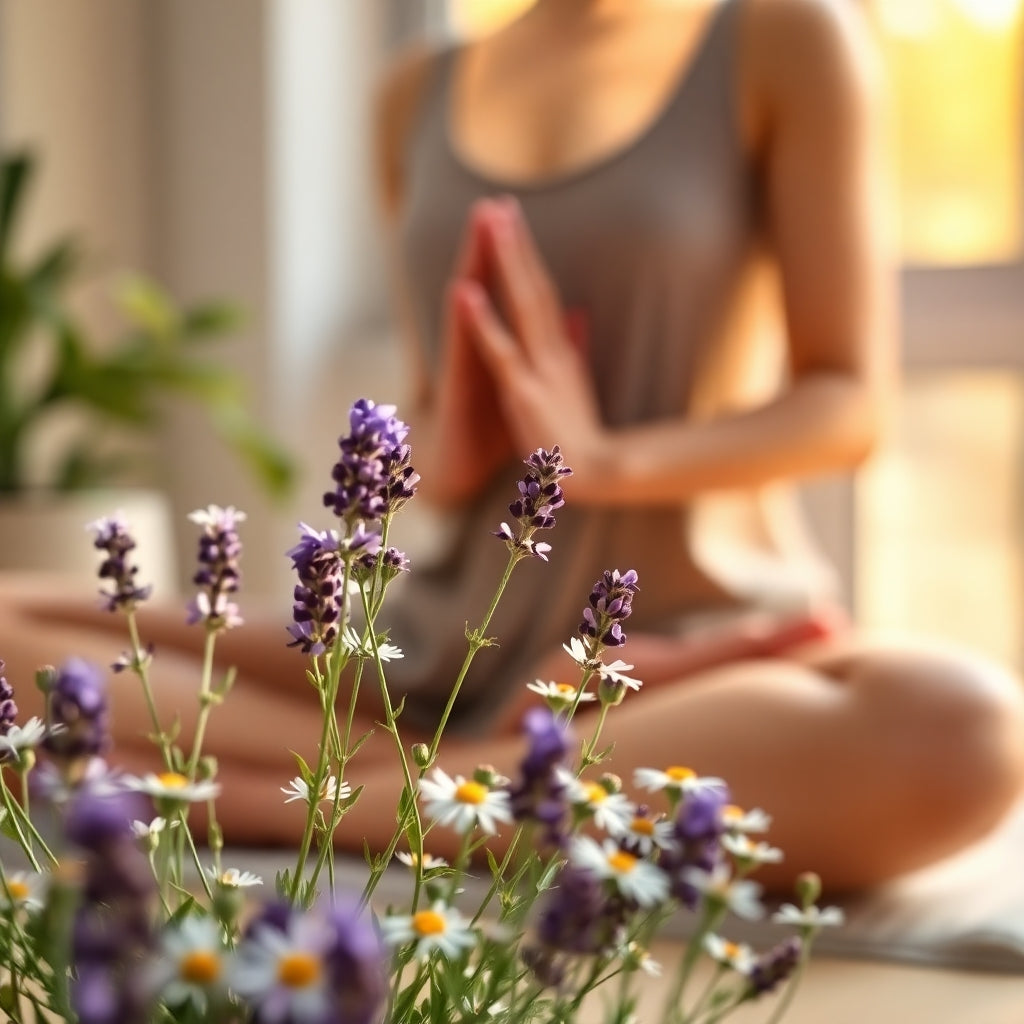
- Tranquility Essence — lavender, for nervous-system overactivity and anxiety.
- Clarity Essence — peppermint, for mental fog, indecision, and focus.
- Confidence Essence — goldenrod, for self-doubt and boundary difficulties.
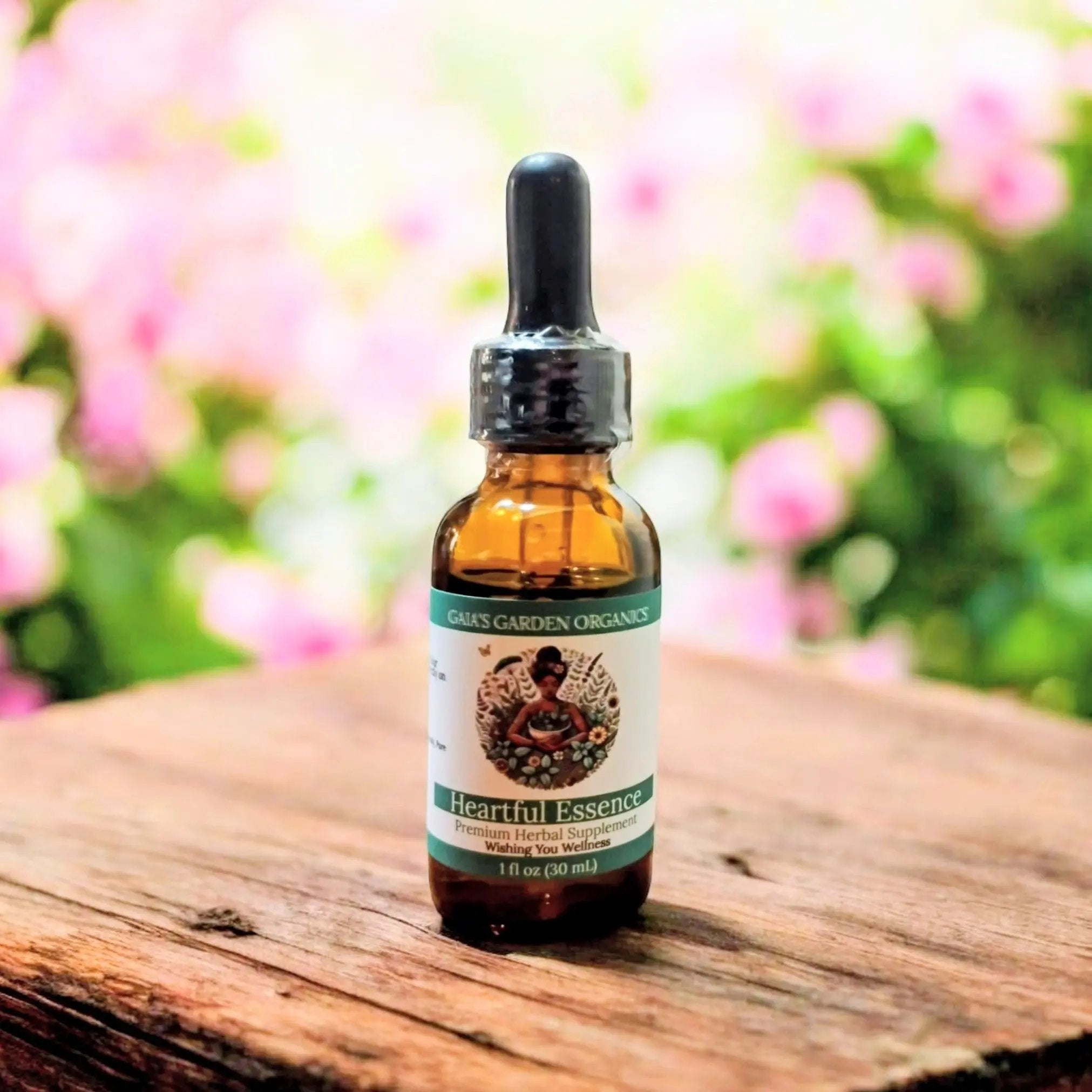
- Heartful Essence — rose, for grief and heart-centered tenderness.
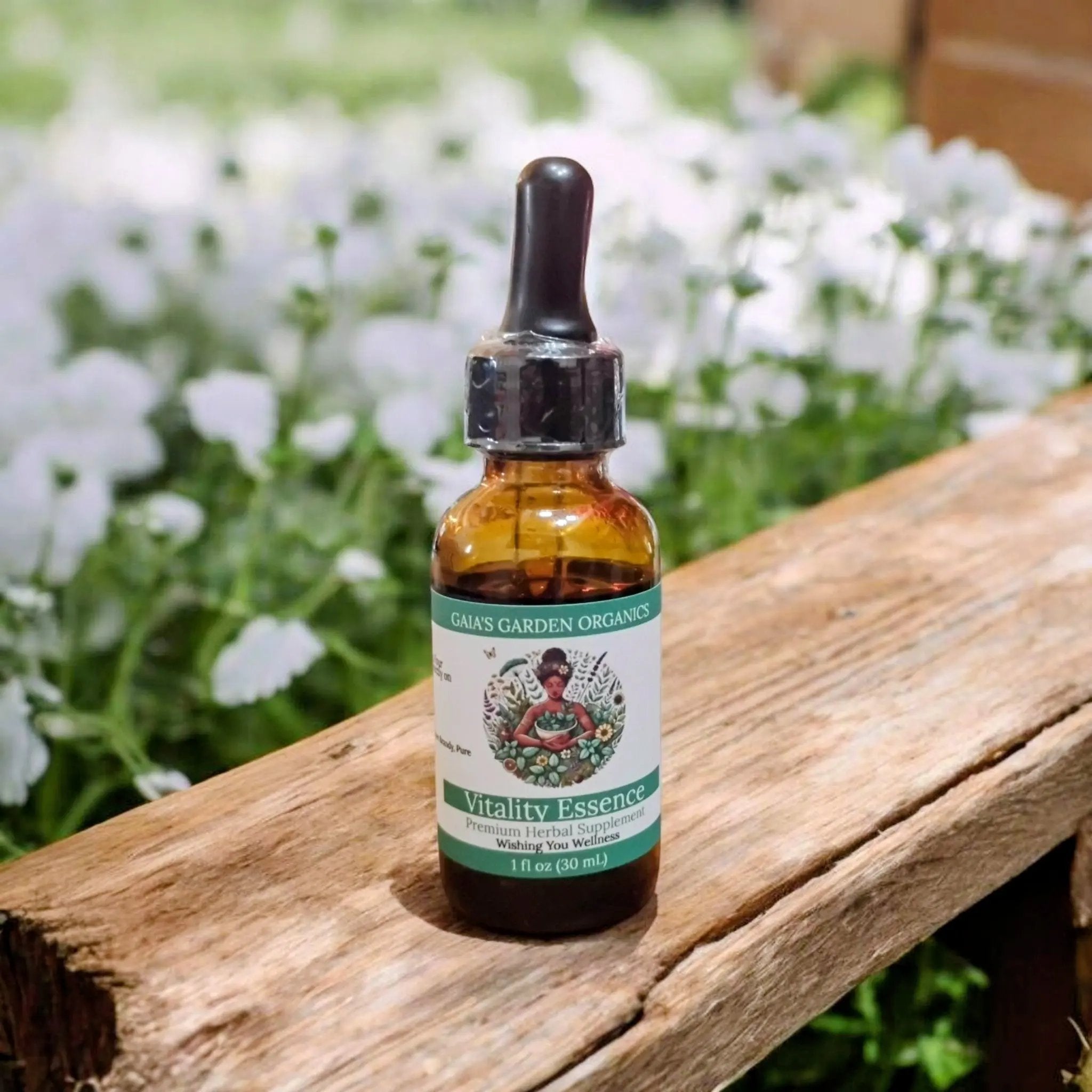
- Vitality Essence — spearmint, for renewed lightness after burnout.
All five are preserved in organic brandy and sun-infused Ouachita mountain water, made by hand using the original Bach method. Our Flower Essence Starter Set includes all five at a bundle price, for anyone building out a complete essence kit from the start.
Frequently Asked Questions
Why do flower essences have brandy in them?
Brandy is the traditional Bach method preservative. Dr. Edward Bach chose it in the 1930s because it preserves the sun-infused water cleanly, indefinitely, and without introducing its own strong energetic signature. Nearly a century of clinical use has confirmed that the original method remains the gold standard.
Can I take a flower essence if I don't drink alcohol?
Yes. The amount of alcohol in a four-drop dose is a trace — typically less than what's in a bite of ripe fruit. If you still want to minimize it, place your dose in a small glass of water and sip it over ten minutes. This is the traditional Bach "dosage water" method and is actually the way essences have always been prepared for children, pets, and long-term daily use.
Are glycerin-preserved flower essences as effective as brandy ones?
In my clinical experience, no. Glycerin has its own energetic and sensory signature that can muddle the imprint of the flower, and almost all of the research and training in the Bach tradition has been conducted with alcohol-preserved essences. For a very small group of clients who cannot tolerate even a trace of alcohol, glycerin is a workable alternative — but brandy remains the traditional and clinically preferred carrier.
How long does a bottle of flower essence last?
Unopened and stored properly (room temperature, out of sunlight), a brandy-preserved essence is shelf-stable for 5 to 10 years. Opened, it's reliable for 3 to 5 years of daily use — far longer than a typical user actually takes to finish a bottle.
Can I give brandy-preserved flower essences to my child or pet?
Many practitioners do, using the dosage-water method: a few drops in a glass of water or pet bowl, sipped through the day. At that dilution, the alcohol trace is negligible. For infants, consult your pediatrician. For pets, read our dedicated pet wellness guidance.
What's the difference between a flower essence and a herbal tincture?
They look similar but work on completely different levels. A herbal tincture is a concentrated chemical extract of a plant, acting physically on the body. A flower essence is a vibrational preparation containing almost no plant chemistry, acting on the emotional and energetic layer. We compare both in detail in our guide to tea vs. tincture vs. flower essence.
A final note on tradition
I've been asked, politely, whether we'd consider switching to a "more modern" preservation method. My answer is always the same: the Bach method isn't old because it hasn't been updated. It's old because it works, and modernizing it has never produced a better result. When something has worked cleanly, reliably, and gently for nearly a hundred years in the hands of thousands of practitioners, the right thing to do is honor the original design.
Every bottle we make is a small extension of Bach's original study of flowers and emotions. We're not trying to reinvent it. We're trying to pass it on intact.
Explore our full flower essence collection, or start with the essence quiz to find the one that matches where you are right now.
Frequently asked
Why do flower essences have brandy in them?
Brandy is the traditional Bach method preservative. Dr. Edward Bach chose it because it preserves the sun-infused water cleanly, indefinitely, and without introducing its own strong energetic signature. Nearly a century of clinical use has confirmed it remains the gold standard.
Can I take a flower essence if I don''t drink alcohol?
Yes. The alcohol in a four-drop dose is a trace amount. If you want to minimize it further, place the dose in a small glass of water and sip over ten minutes — the traditional Bach dosage-water method.
Are glycerin-preserved flower essences as effective as brandy ones?
In clinical experience, no. Glycerin carries its own energetic and sensory signature that can muddle the imprint of the flower, and the Bach tradition''s research was built on alcohol-preserved essences. Brandy remains the clinical standard.
How long does a bottle of flower essence last?
Unopened and stored properly, a brandy-preserved essence is shelf-stable for 5 to 10 years. Opened, it is reliable for 3 to 5 years of daily use.
Can I give brandy-preserved flower essences to my child or pet?
Many practitioners do, using the dosage-water method: a few drops in a glass of water or pet bowl, sipped through the day. At that dilution the alcohol trace is negligible. For infants, consult your pediatrician.
What is the difference between a flower essence and a herbal tincture?
They look similar but work on different levels. A herbal tincture is a concentrated chemical extract acting physically on the body. A flower essence is a vibrational preparation containing almost no plant chemistry, acting on the emotional and energetic layer.
Products from this article
Handcrafted in Umpire, Arkansas by Gaia Devi, clinical herbalist.
 New
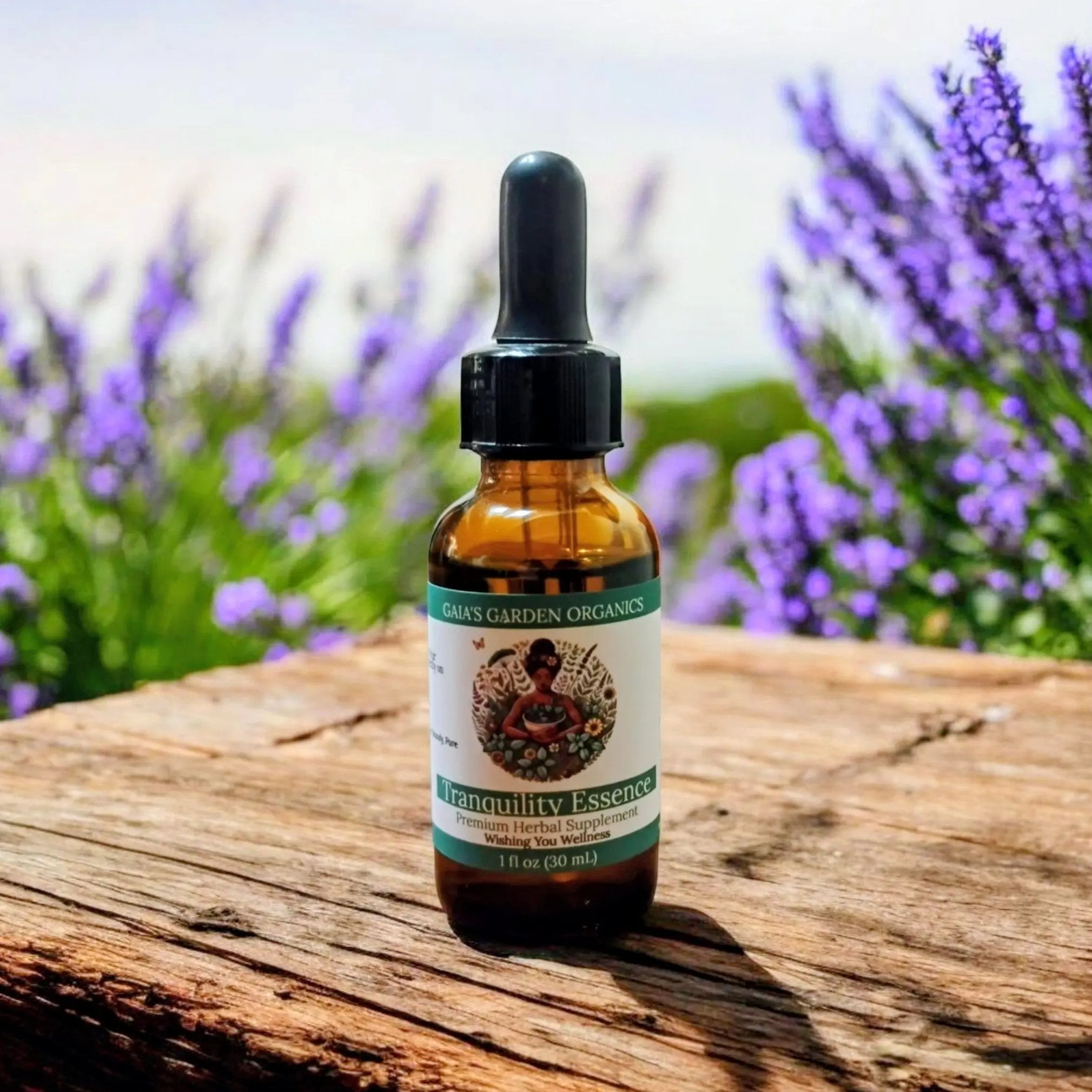
NewGaia's Tranquility Essence - Organic Lavender Flower Essence
for stress & anxious hearts
 New
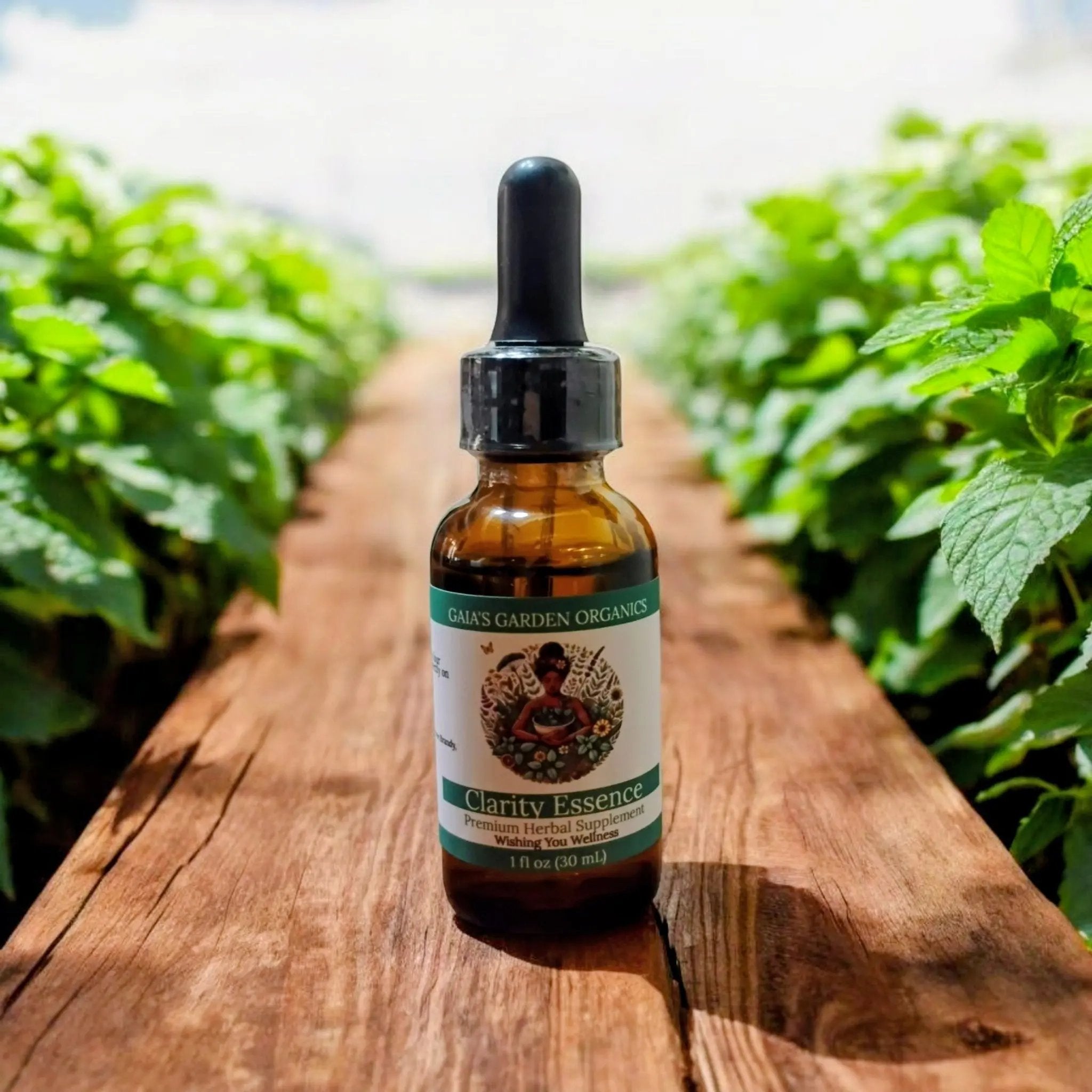
NewGaia's Clarity Essence - Organic Peppermint Flower Essence
for focus & mental alertness
 Bestseller
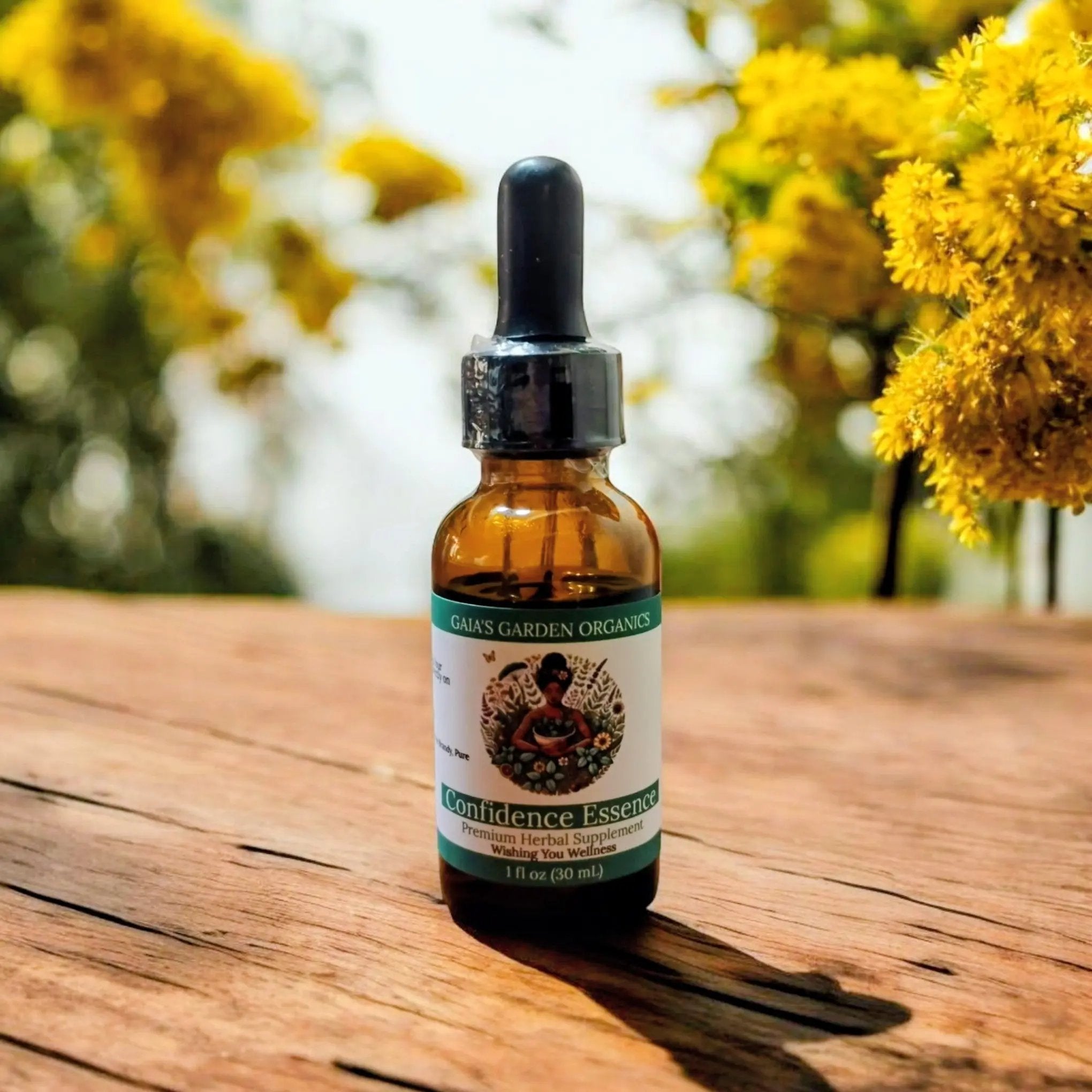
Gaia's Confidence Essence - Organic Goldenrod Flower Essence
for courage & self-assurance
 Bestseller
Gaia's Heartful Essence - Organic Rose Flower Essence
for grief & heart-opening
 New
NewGaia's Vitality Essence - Organic Spearmint Flower Essence
for energy & renewed lightness
Explore our apothecary
Learn more
Flower Essences 101
A clinical herbalist's plain-English guide to what flower essences are and how to take them.
Find your match
Find your flower essence
9-question quiz matching your current emotional state to one of our five essences.
Shop the apothecary
The Flower Essence Starter Set
All 5 essences bundled at 20% off — the full emotional toolkit.