In this article (13)▾
Herbal Tea vs. Herbal Tincture: Which Format Is Right for You?
A clinical herbalist's side-by-side guide to choosing between the two most traditional forms of plant medicine.
In this guide I'll walk you through the honest tradeoffs between teas and tinctures, the situations each one is genuinely better for, and how we use both at Gaia's Garden Organics to cover the full spectrum of daily herbal support. By the end you'll know exactly which format belongs in your cabinet, your travel bag, and your bedtime ritual.
The short answer
Herbal teas are best when you want a slow, nourishing, full-body ritual — the kind of herbal support you steep, hold, and sip over ten or fifteen minutes. Teas are gentle, hydrating, and deeply traditional; they shine for daily tonics, digestive support, and anything where the sensory experience itself is part of the medicine.
Herbal tinctures are best when you want something potent, portable, and precise. Tinctures concentrate the active constituents of a plant into an alcohol-based liquid that absorbs quickly under the tongue. They shine when you need fast onset, exact dosing, or a format that travels in a purse, a glove box, or a hiking pack.
Most people benefit from having both on hand. A tea for the slow hour after dinner; a tincture for the moment stress hits in the middle of a meeting.
What a herbal tea actually is
A herbal tea — technically a tisane or infusion — is dried plant material steeped in hot water. When you pour hot water over a blend of chamomile, tulsi, and rose, the water extracts water-soluble constituents: volatile oils, polysaccharides, minerals, flavonoids, tannins, and bitter principles. Those compounds are what give the tea its aroma, color, and physiological action.
Teas are a time-dose practice. You're not drinking a concentrated remedy; you're spending ten to fifteen minutes in sensory contact with the plant. That pause, the warmth, the ritual — all of it matters. For many clients, the nervous-system calming that happens during tea preparation is as meaningful as the chemistry of the plants themselves.
Best for:
- Daily tonics — things you want to support over weeks or months, like mood, digestion, or cardiovascular wellness.
- Evening rituals — the slow act of steeping primes the parasympathetic nervous system before bed.
- Hydration plus herbs — if you don't drink enough water, medicinal tea is a painless way to pair both.
- Children and the alcohol-averse — teas are naturally alcohol-free.
- Digestive support — the warmth itself stimulates digestion, a benefit tinctures can't replicate.
Limitations of tea:
- You have to steep it. On a rough morning, that's a real barrier.
- Not all plant constituents are water-soluble — some resins, alkaloids, and lipid-based actives come out best in alcohol, which means a tea may miss part of the plant's chemistry.
- Dosing is imprecise. A weak steep versus a long, covered infusion can double the active content.
- Travel and portability are awkward.
What a herbal tincture actually is
A tincture is a liquid extract of a plant in a mixture of alcohol and water. At our apothecary, we prepare tinctures at precise weight-to-volume ratios — the clinical standard in Western herbalism — which means each bottle contains a known concentration of plant material. Alcohol is a more powerful solvent than water alone; it pulls out a broader spectrum of constituents, including many that water can't touch, and it preserves the finished medicine for years.
You take a tincture by dropping it under your tongue, holding it there for fifteen to thirty seconds, and then swallowing. That sublingual hold lets a portion of the constituents absorb directly through the thin tissue of your mouth into the bloodstream, which is why tinctures often feel faster than capsules or teas. For the full science on why sublingual absorption is so efficient, see our companion post on the science of sublingual absorption.
Best for:
- Fast-acting support — acute stress, a racing mind, a sudden flare of nervous tension.
- Precise dosing — counted in drops or small measured volumes, easy to titrate up or down.
- Portability — a one-ounce amber bottle fits in any bag.
- Shelf life — properly preserved tinctures last 3 to 5 years or more.
- Strong, bitter, or resinous plants — plants like valerian, echinacea root, and propolis extract best in alcohol.
Limitations of tinctures:
- They contain alcohol. Most sub-dropper doses deliver far less alcohol than a bite of bread baked with wine, but it's a real consideration for people in recovery, people with certain medical conditions, and very young children.
- The taste is strong and unapologetic. Most clients come to love it; some never do.
- They don't hydrate. A tincture is a dose, not a drink.
- They skip the sensory ritual entirely. If tea's slow steep is medicine for your nervous system, a tincture can feel transactional.
Side-by-side: what to reach for when
| Situation | Better choice | Why |
|---|---|---|
| Winding down before bed | Tea | The ritual itself signals the nervous system to shift gears. |
| Can't sleep at 2am | Tincture | Fast onset; no steeping a kettle at midnight. |
| Daily cardiovascular support | Tea | Long, consistent, nourishing baseline. |
| A panic wave mid-meeting | Tincture | Portable, sublingual, discreet. |
| Afternoon digestive slump | Tea | The warmth stimulates digestion alongside the herbs. |
| Acute stress of a hard conversation | Tincture | Fast, measurable, no prep. |
| Seasonal immune support | Tea for daily, tincture for acute | Different jobs: maintain vs. respond. |
| Giving herbs to a child | Tea | Alcohol-free, often sweetened with a little honey. |
| Traveling or camping | Tincture | One small bottle replaces a full tea ritual. |
| Morning grounding routine | Either — or both | Tincture for pointed support, tea for the sensory pause. |
Potency: the question everyone asks
"Is a tincture stronger than a tea?" is the question I hear most. The short answer is yes, in the sense that the same amount of plant material produces a more concentrated final product in alcohol than it does in hot water. But "stronger" isn't always "better." Some plants are traditionally taken as teas because the delivery method is part of the effect — nervines, digestive bitters, and aromatic relaxants are often best absorbed slowly alongside warm fluid.
A well-chosen tea, steeped correctly (covered, for 10–15 minutes), is a serious herbal dose. A three-cup-a-day tea habit with a thoughtful blend like our Healing Hypnotic Tea is doing real nervous-system work. Don't underestimate it.
Where tinctures have a clear edge is in speed of onset and reproducibility. If you want the same measurable dose at 9am every morning, a tincture gives you that with fewer variables than a tea.
What about flower essences? Are those the same as tinctures?
Not at all — and this is a common confusion. A flower essence looks like a tincture (it's a liquid preserved in a small amount of alcohol, taken by drops under the tongue) but it's made differently and it acts on a completely different level. Flower essences are vibrational preparations: sun-infused flower imprints preserved in brandy and mountain water, taken for emotional and energetic patterns, not physical chemistry. For the full picture, read our deep dive on flower essences for emotional balance.
Think of the spectrum like this:
- Tea — nourishing, hydrating, chemistry-rich, ritualistic.
- Tincture — potent, fast, precise, physical.
- Flower essence — gentle, vibrational, emotional, subtle.
Most complete home apothecaries include all three because they handle different kinds of work.
How we make ours — and why it matters
Every tea and tincture in our apothecary is grown in our medicinal garden in Umpire, Arkansas, hand-harvested by Gaia, dried or extracted in small batches, and bottled and labeled by hand. Our tinctures are prepared at clinical weight-to-volume ratios in organic alcohol — no proprietary blends, no filler botanicals added to stretch a bottle. Our teas are blended loose-leaf and in small batches so the volatile oils that make an herb a medicine are still present when you open the bag.
We don't use a co-packer. We don't white-label anyone else's work. Seed to bottle, every time — because the quality of a finished remedy is almost entirely decided in the fifty little steps between the garden and the bottle.
Tea recommendations if you're just starting
- Healing Hypnotic Tea — for evenings that need a slow-down; traditional nervine herbs in a loose-leaf blend.
- Happy Heart Tea — hawthorn, rose, and linden for emotional support and cardiovascular nourishment.
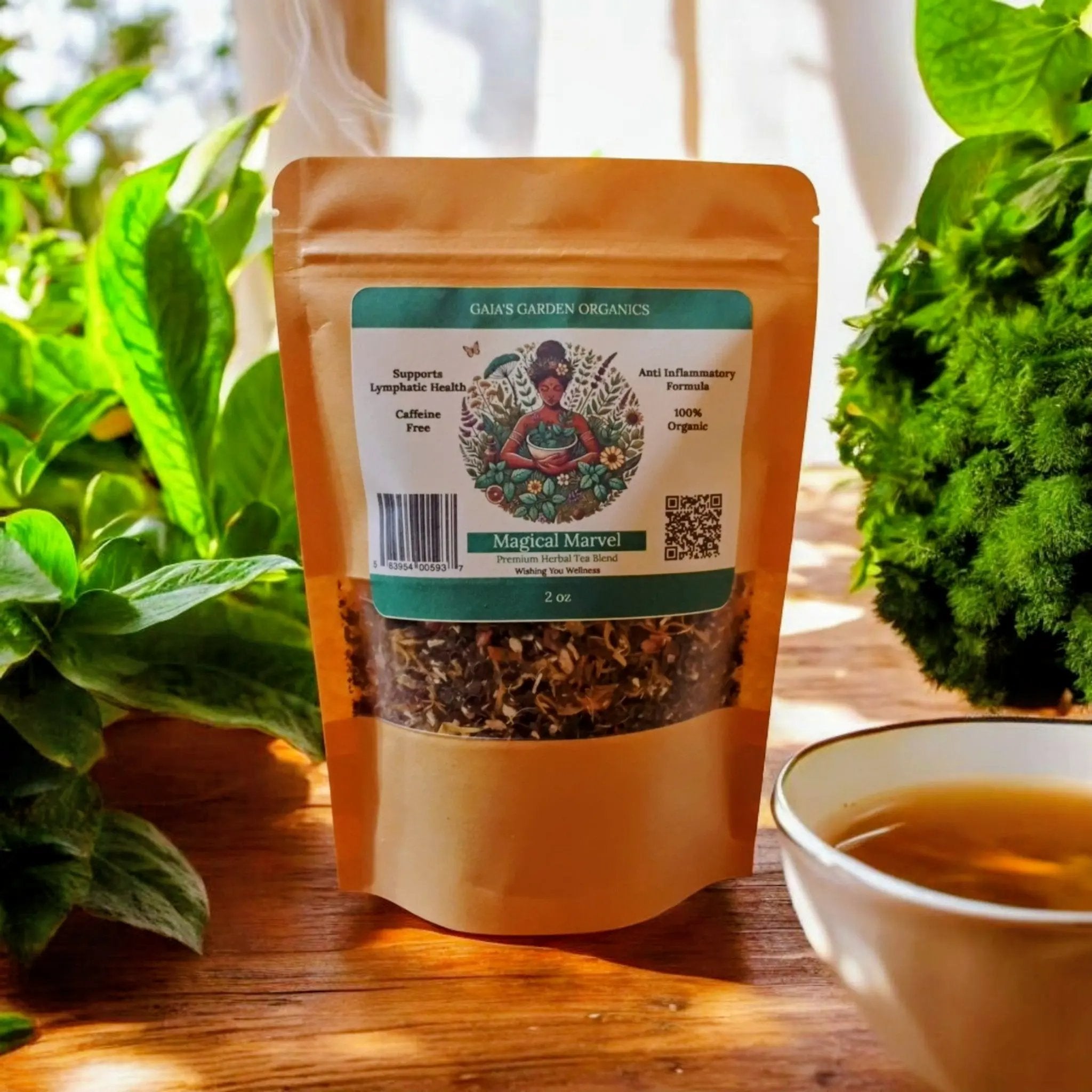
- Magical Marvel Tea — a daily tonic blend for general vitality.
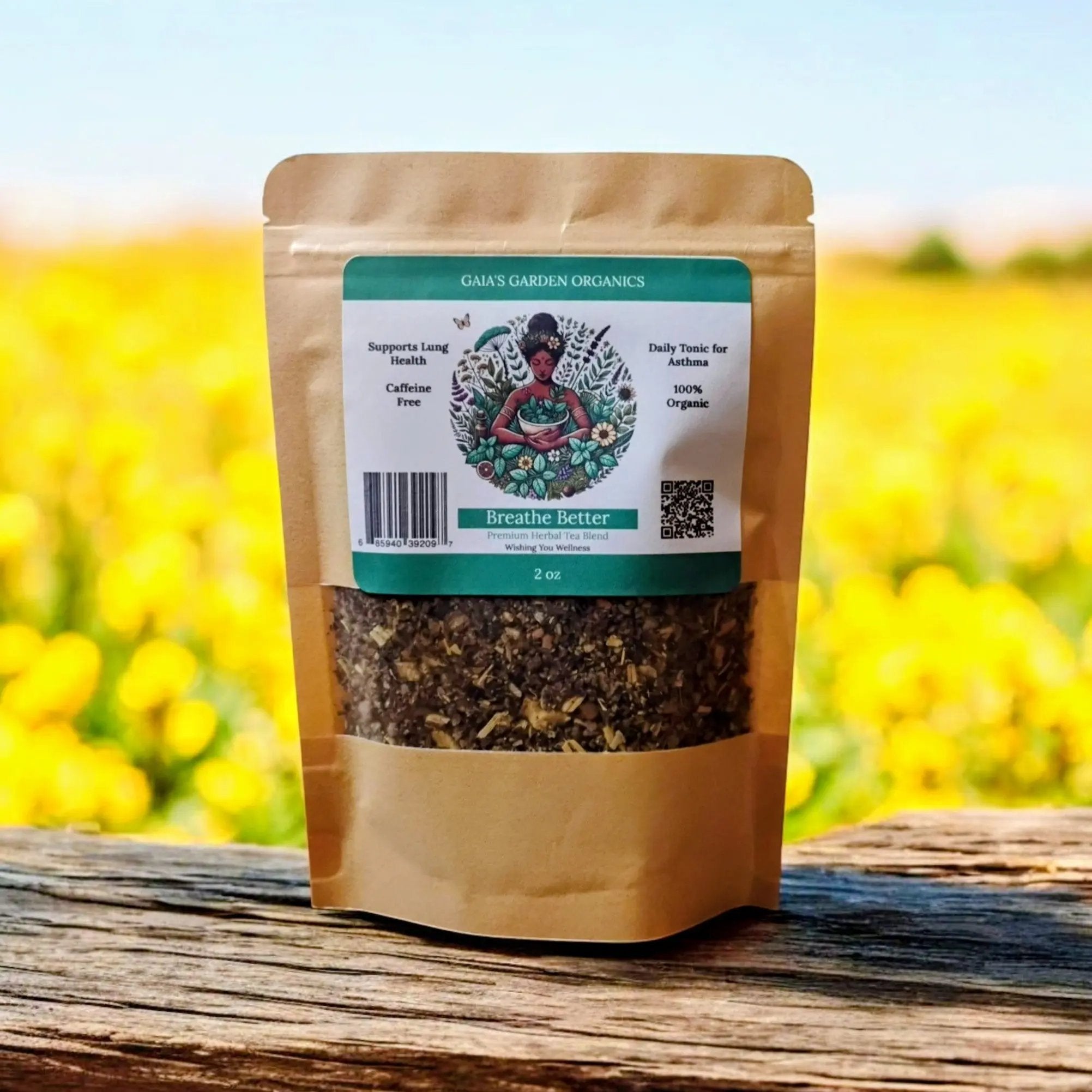
- Breathe Better Tea — for seasonal respiratory support in cool-weather months.
Tincture recommendations if you're just starting
- Calm Spirit Tonic — a daytime nervine blend for when stress hits and you need it to pass.
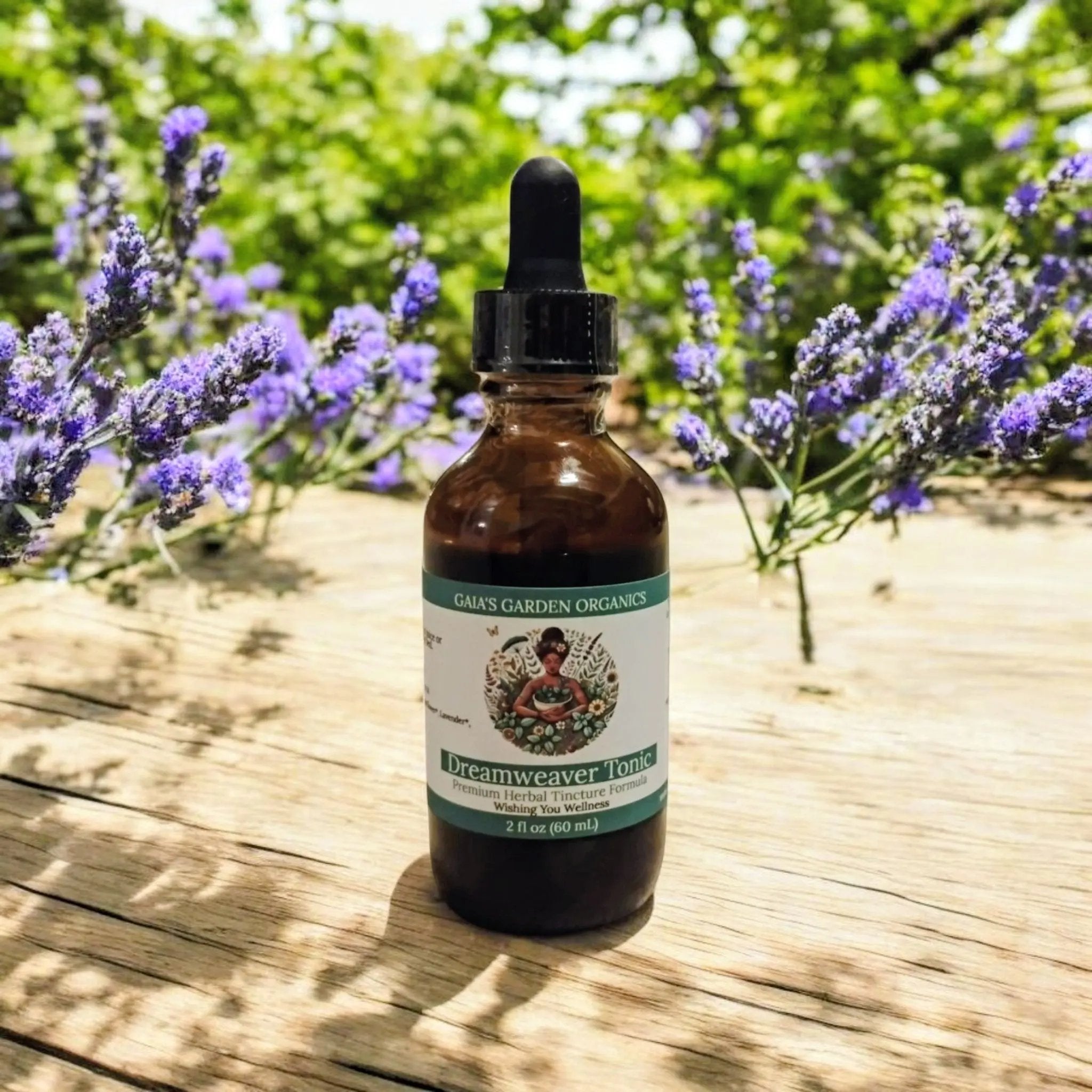
- Dreamweaver Tonic — for occasional restless nights; taken 30 minutes before bed.
- Comfort & Ease Tonic — for the achy-after-a-long-day kind of day.
Building a complete apothecary: you don't have to choose
The honest truth is that most clients who ask "tea or tincture?" end up using both within a month of starting. A morning tincture for focused support, an evening tea for the slow-down ritual. A travel tincture in the bag, a Sunday-afternoon tea for the emotional reset. The two formats are partners, not competitors.
If you're building out a home apothecary from scratch, we wrote a clinical herbalist's starter kit guide that walks through which five remedies to reach for first — a mix of teas, tinctures, and essences that covers most of what daily life throws at a person.
Frequently Asked Questions
Are herbal tinctures stronger than herbal teas?
Tinctures are more concentrated than teas made from the same amount of plant material, and they absorb faster thanks to the sublingual route. That said, a well-chosen, properly steeped tea is a real clinical dose — and for some applications (warmth for digestion, slow ritual for the nervous system) the tea is actually the right tool. "Stronger" isn't always "better."
How much alcohol is in a typical tincture dose?
A standard dose of a tincture is usually 20–40 drops — roughly half a teaspoon. That delivers a trace of alcohol, typically less than what's in a ripe piece of fruit or a bite of bread. It's meaningful information if you're in recovery or avoiding alcohol for another reason, but for most adults it's negligible.
Can I make a tincture into a tea by diluting it in hot water?
Yes — and many practitioners do exactly this when a client wants the speed of a tincture with a warmer, more ritualistic delivery. Add 20–40 drops of tincture to a cup of hot water or warm herbal tea. You'll dilute the alcohol, warm the dose, and get the sensory benefit of the steam.
Which one is better for anxiety?
They're complementary. For acute, here-right-now anxiety, a tincture (like our Calm Spirit Tonic) works fast. For the kind of low-grade, all-day-long anxiety that builds up over a week, a daily tea practice plus a flower essence often does more. Read our guide on flower essences vs tinctures for anxiety for the full breakdown.
How long do tinctures and teas last?
Properly made tinctures, stored out of sunlight, last 3 to 5 years or longer. Dried loose-leaf teas hold their potency best for 12 to 18 months — after that, the volatile oils begin to dissipate and the blend loses its clinical edge. Keep teas in a sealed jar, out of light, and away from the stovetop.
Can I give herbal teas to my children?
Many traditional culinary and nervine herbs — chamomile, linden, oat straw, rose hips — have a long history of safe use with children when prepared as mild teas. Always consult your pediatrician for guidance specific to your child, and never give any herbal product to an infant under six months without medical supervision.
Next step
The best way to answer "tea or tincture?" is to let your week tell you. For the next seven days, notice when you reach for comfort: is it the slow kind, or the fast kind? Ritual, or relief? The answer will tell you which to put in your cabinet first. Then come back, and we'll find you the second.
Browse our full herbal tea collection or our herbal tincture collection to start building your apothecary — or let our flower essence quiz point you toward the single best first remedy for your life right now.
Frequently asked
Are herbal tinctures stronger than herbal teas?
Tinctures are more concentrated than teas made from the same amount of plant material, and they absorb faster via the sublingual route. That said, a well-chosen, properly steeped tea is a real clinical dose. Stronger is not always better.
How much alcohol is in a typical tincture dose?
A standard 20 to 40 drop dose delivers a trace of alcohol, typically less than what is in a ripe piece of fruit or a slice of bread. It is meaningful for people in recovery or avoiding alcohol, but negligible for most adults.
Can I turn a tincture into a tea by diluting it in hot water?
Yes. Adding 20 to 40 drops of tincture to a cup of hot water or warm tea dilutes the alcohol, warms the dose, and gives you the sensory benefit of steam alongside the active constituents.
Which is better for anxiety — tea or tincture?
They are complementary. For acute, here-and-now anxiety a tincture is faster. For low-grade all-day anxiety a daily tea practice plus a flower essence often does more.
How long do tinctures and teas last?
Properly stored tinctures last 3 to 5 years or longer. Dried loose-leaf teas hold their potency best for 12 to 18 months before volatile oils begin to dissipate.
Can I give herbal teas to my children?
Many traditional culinary and nervine herbs like chamomile, linden, oat straw, and rose hips have a long history of safe mild-tea use with children. Always consult your pediatrician for specific guidance.
Products from this article
Handcrafted in Umpire, Arkansas by Gaia Devi, clinical herbalist.
 New
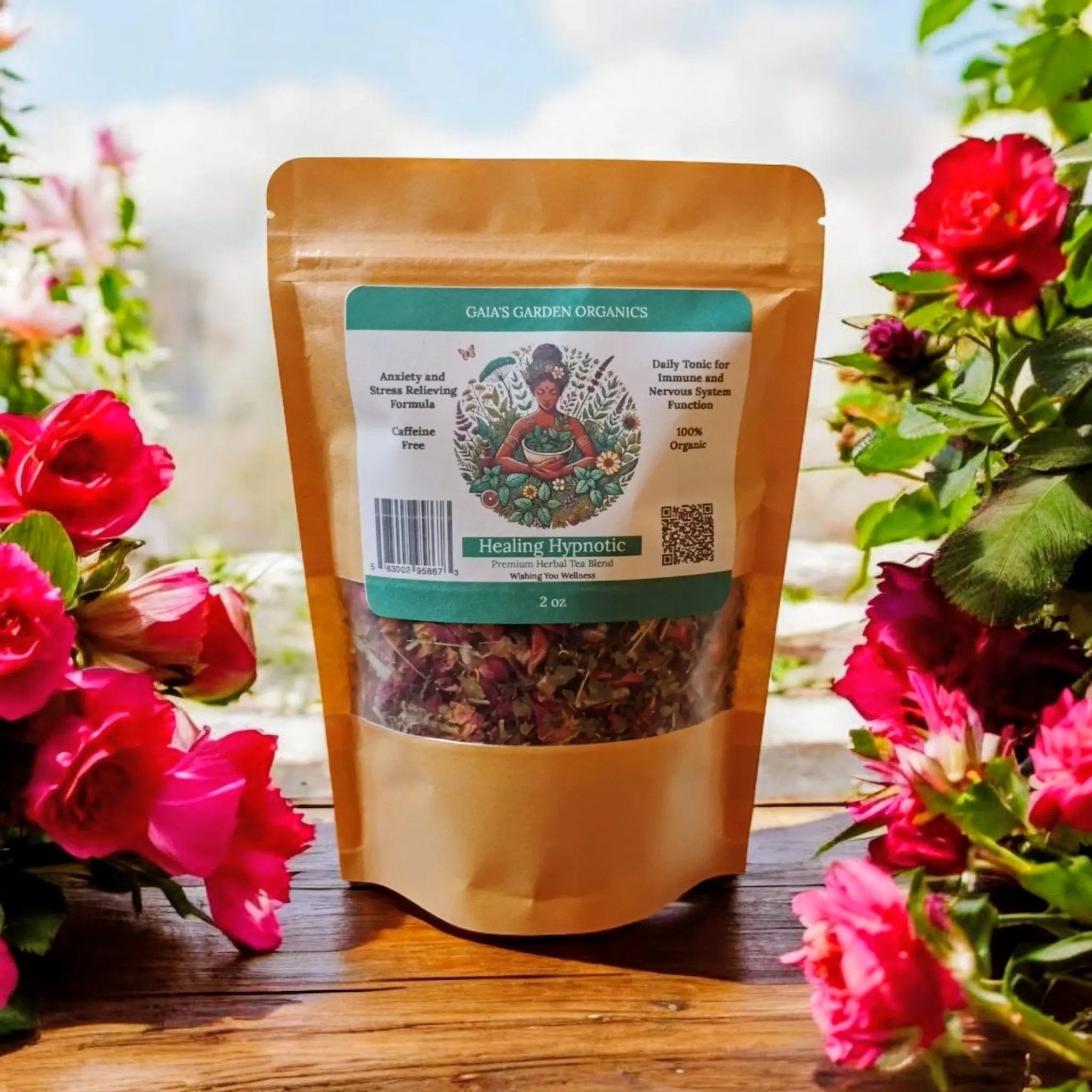
NewGaia's Healing Hypnotic Herbal Tea
for the busy-mind bedtime
 New
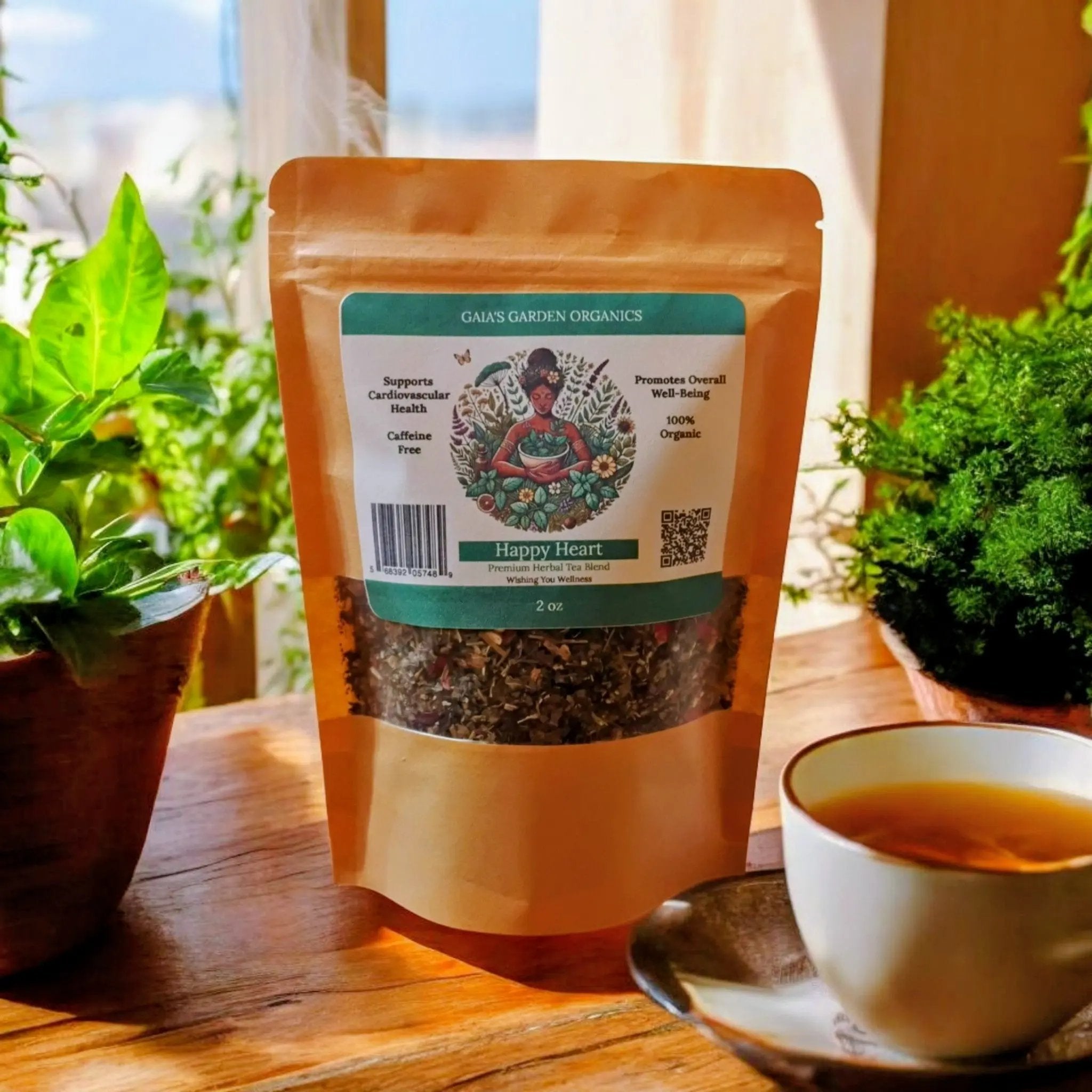
NewGaia's Happy Heart Herbal Tea
for heart-centered comfort
 New
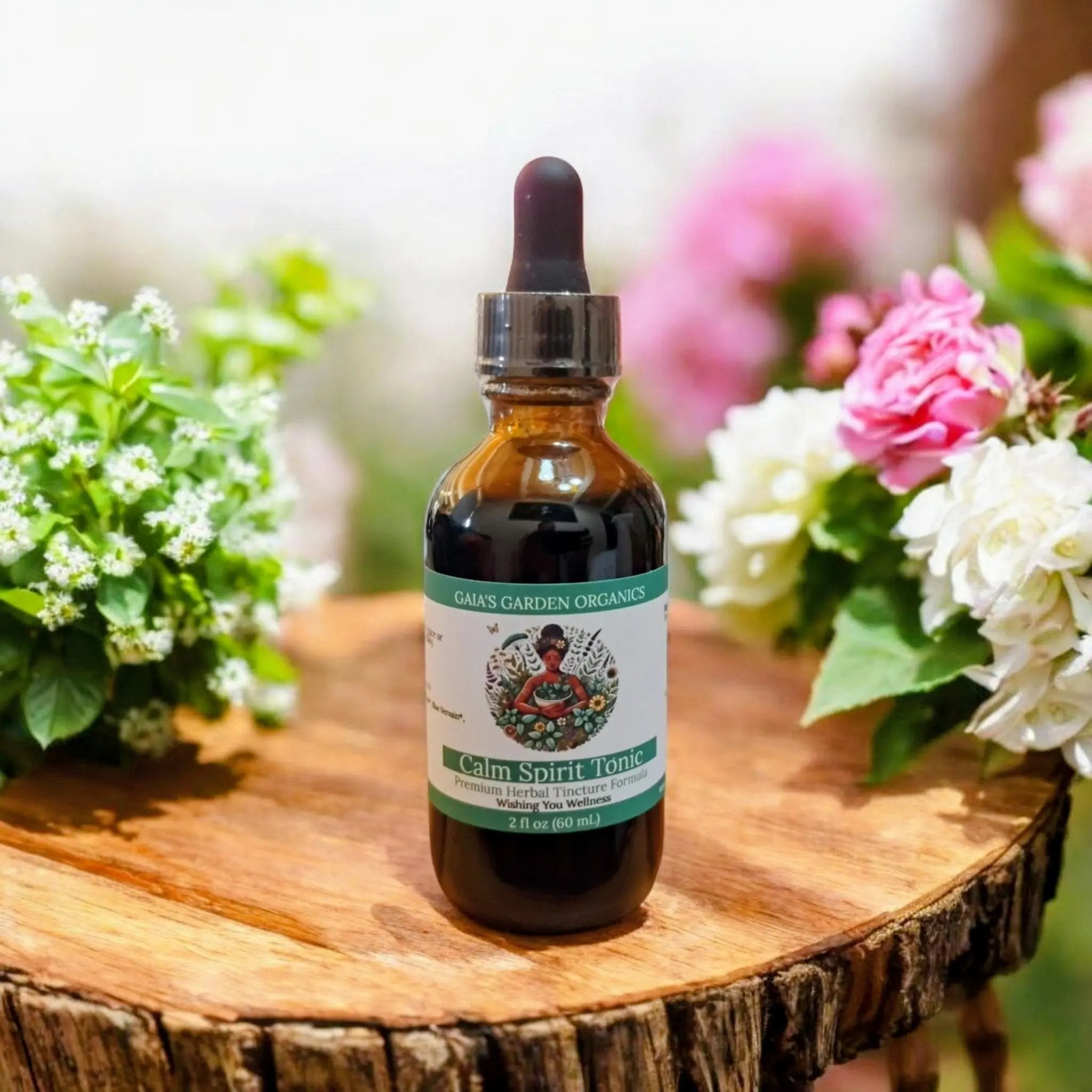
NewGaia's Calm Spirit Tonic
for calm and a quiet mind
 New
NewGaia's Dreamweaver Tonic
for slipping into sleep
 NewSold out
Gaia's Magical Marvel Herbal Tea
for everyday vitality
 New
NewGaia's Breathe Better Herbal Tea
for clear breathing
Explore our apothecary
Learn more
Flower Essences 101
A clinical herbalist's plain-English guide to what flower essences are and how to take them.
Find your match
Find your flower essence
9-question quiz matching your current emotional state to one of our five essences.
Shop the apothecary
Medicinal Herbal Teas
Loose-leaf, clinical-herbalist-blended teas — each built around a specific job.