In this article (14)▾
How to Take Herbal Tinctures: A Clinical Herbalist's Guide to Dosage, Timing, and Absorption
Everything you need to know to get real results from your first bottle — how many drops, when to take them, how to hold them, and how long before you'll feel the shift.
In this guide I'll walk you through exactly how I teach my clients to take their tinctures — the sublingual technique, the honest dosage ranges, when in the day to take each type, how long before you should expect to feel anything, and the mistakes that quietly blunt an otherwise well-made remedy. Keep this page bookmarked; it answers most of the questions that come up in the first week.
The short answer
For a standard adult-strength herbal tincture:
- Dose: 20–40 drops (roughly half a dropper to a full dropper), one to three times daily.
- Delivery: Drop it directly under the tongue. Hold for 30 seconds. Swallow.
- Timing: Depends on the tincture — calming blends in the evening, immune or digestive support with meals, stimulating blends in the morning.
- Onset: Most people notice an effect within 15–30 minutes for acute-action tinctures (like a nervine). Tonic effects build over 2–6 weeks of consistent daily use.
The rest of this guide is the why behind each of those numbers.
What a tincture actually is
A tincture is a liquid extract of a plant — or a combination of plants — made by soaking fresh or dried plant material in a mixture of alcohol and water for several weeks, then straining out the marc (the spent plant material). The alcohol pulls out a wide range of constituents from the plant: bitters, resins, alkaloids, glycosides, flavonoids, and volatile oils. The result is a small bottle of concentrated plant medicine that stores for years and can be dosed precisely.
At our apothecary, every tincture is made at a clinical weight-to-volume ratio — which means each milliliter of liquid contains a known amount of plant material. This is the herbal-medicine-school standard, and it's what lets you dose a tincture with actual precision rather than "a splash."
For the chemistry of why the sublingual route is so efficient, our companion piece on the science of sublingual absorption has the full breakdown. The short version: the thin tissue under your tongue is rich with small blood vessels, and constituents can diffuse directly into the bloodstream without having to pass through the digestive tract and liver first.
How many drops should I take?
A standard adult dose for most tinctures is 20 to 40 drops, taken once to three times daily. Drops are a unit of measure herbalists have used for centuries, and they're not arbitrary — a calibrated glass dropper delivers roughly consistent drops of a given liquid. Most of our dropper caps deliver about 30 drops per full squeeze.
The variation between the low end (20 drops) and the high end (40+ drops) comes down to three factors:
- The strength of the tincture. A 1:2 fresh-plant tincture is more concentrated than a 1:5 dried-herb tincture, so a smaller dose of the former matches a larger dose of the latter. Read the label — it tells you what you're working with.
- Your body size and constitution. A 110-pound person and a 220-pound person don't need the same dose. Start lower if you're petite, lighter-built, or especially sensitive to plant medicine.
- The kind of plant. Powerful, bitter, or strongly-acting plants (think valerian or lobelia) are dosed more cautiously than gentle nervines or digestive bitters. Our labels always tell you where your tincture falls on that spectrum.
The right dose for you is the one that produces the effect you're looking for without causing any unpleasantness. Start at the lower end — 15 to 20 drops, once a day. Wait three or four days. If you feel a subtle shift, stay there. If you feel nothing, add a second dose each day, or raise each dose by 5 drops, and give it another three or four days. Move slowly. Over-dosing a tincture doesn't get you faster results; it usually just gets you a queasy stomach.
The sublingual hold: why it matters
Here's a simple fact that changes a lot of people's experience of tinctures: holding the dose under your tongue for 30 seconds before swallowing can meaningfully speed the effect.
When you drop a tincture under your tongue, the thin tissue there gives a fraction of the constituents a direct route into the bloodstream — bypassing the digestive tract and the first-pass metabolism of the liver. That's why a tincture for acute stress starts to soften the edge of a hard moment within 15–30 minutes, while the same plants taken as a capsule might take over an hour.
If you swallow the tincture immediately (or mix it into a large glass of juice), you still get the therapeutic effect — the constituents absorb through the stomach and small intestine like any other supplement. But you lose the sublingual advantage. For acute-action tinctures — the ones you reach for when you need something now — the hold matters.
For long-term tonic tinctures taken over weeks to build a baseline, the sublingual hold is less critical. Consistency matters more than delivery technique for that kind of work.
When during the day should I take it?
This is where knowing your tincture matters. The right timing depends on what the blend is designed to do:
Calming or sedating tinctures
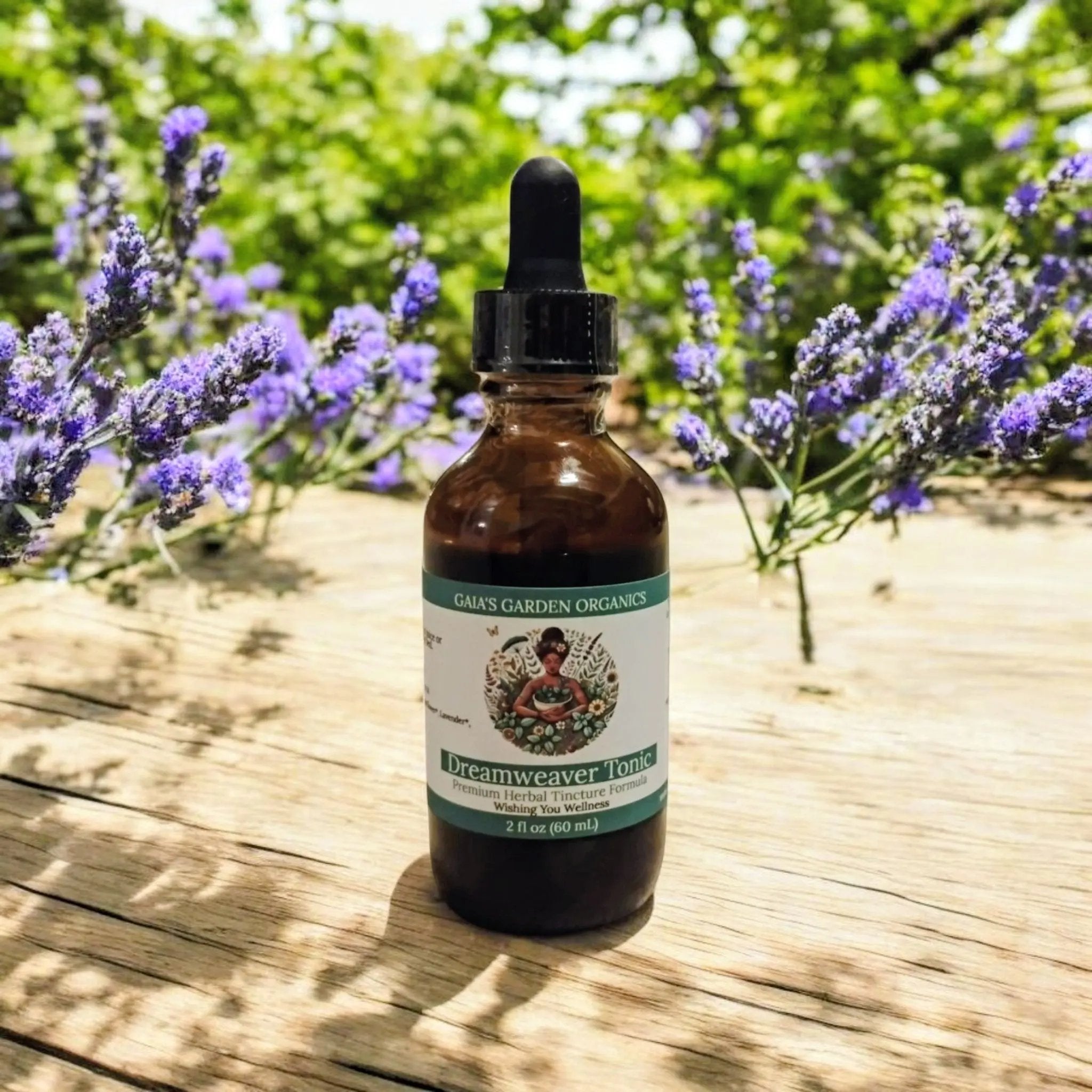
Take these in the evening, 30–60 minutes before bed, or whenever you need acute support during the day. Our Dreamweaver Tonic, for example, is designed to be taken about 30 minutes before lights-out so the nervine herbs are at peak effect as you settle.
Daytime nervines and stress tinctures
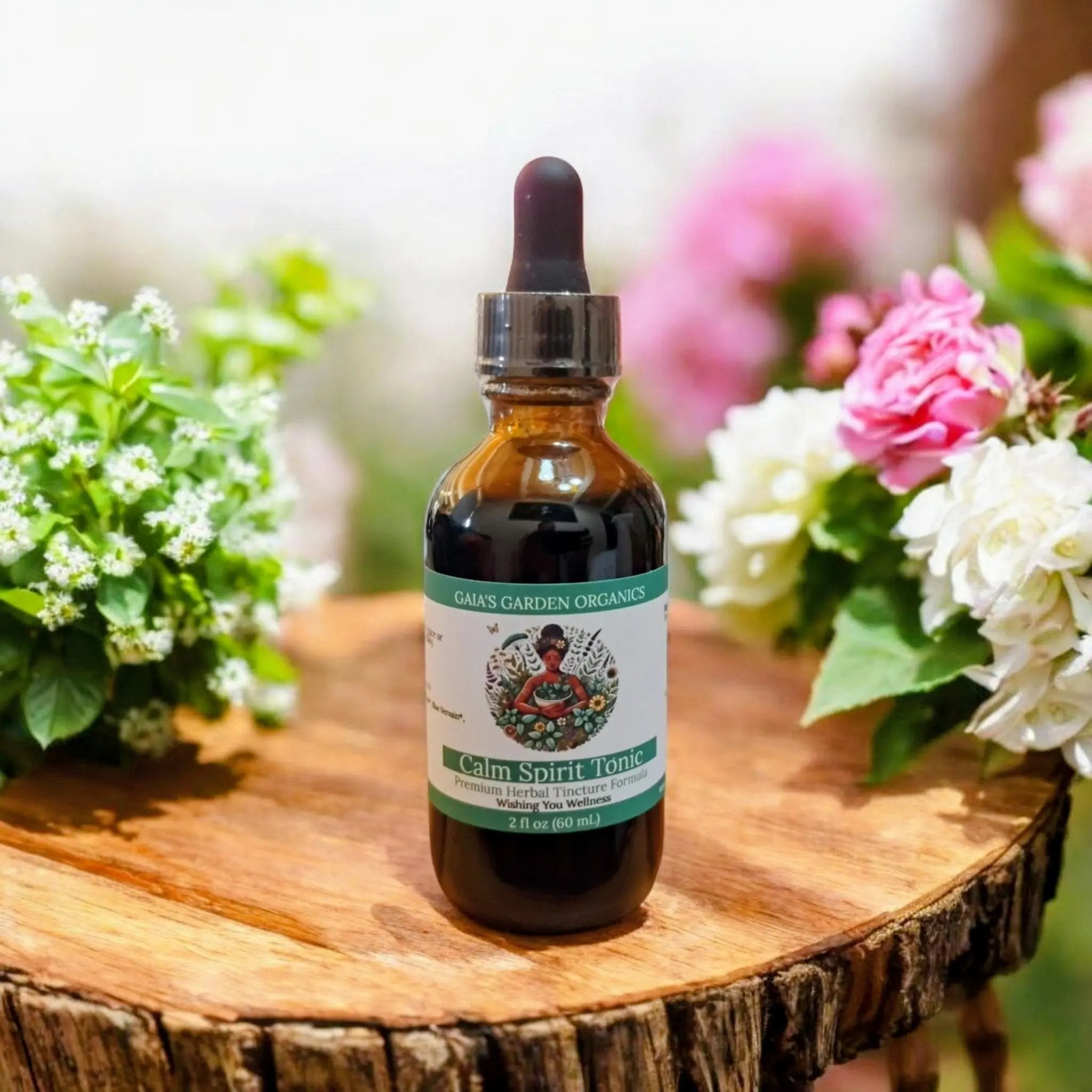
Can be taken any time of day the stress hits. Many of my clients keep a dropper of Calm Spirit Tonic in their purse or glove box and take a dose as needed — before a hard meeting, after an emotional conversation, or in the middle of a restless afternoon. These won't sedate you; they'll take the sharp edge off.
Tonics for long-term support
Take these once or twice daily at consistent times — usually morning and mid-afternoon, with or without food. Tonics work by building a baseline over weeks, so the most important variable is whether you're actually taking them each day. Pair with an existing habit (morning coffee, brushing teeth) to build the routine.
Digestive or bitters blends
Take 15 minutes before meals. The bitter plants in these blends prime the digestive system to produce its own enzymes, bile, and stomach acid — and that priming is most useful right before you eat.
Immune support tinctures during an acute situation
During a cold or flu, short-term immune blends are often taken three to five times a day for a few days, then reduced as symptoms ease. Follow the specific label — and don't try to take a strong immune blend as a daily tonic for months; these herbs aren't always meant for long-term constant use.
With or without food?
Most tinctures can be taken with or without food. A few situations where it matters:
- With food if the tincture upsets your stomach on an empty one. Strong or bitter blends sometimes do.
- Without food if you want the fastest sublingual absorption. Nothing in your mouth competing with the tincture for that first-pass uptake.
- Before meals for digestive bitters, always. The whole mechanism is to prime the pre-meal cascade.
A simple rule: experiment. Take a dose with food for a week and see how your body responds, then try it without food the next week. Most people settle into a rhythm that works for their specific body quickly.
How long before I'll feel it working?
Two different timescales, depending on what you're taking it for:
Acute-action tinctures: 15 to 30 minutes
For nervines, acute stress tinctures, digestive bitters, and pain-tonic blends, the effect is usually noticeable within the first half hour. You'll feel a softening, a relief, a warming of the stomach, a slowing of the mind. If you feel nothing at 30 minutes, you may need a larger dose — another 10 drops, taken the same way.
Tonic tinctures: 2 to 6 weeks
For adaptogens, liver tonics, circulatory support, and long-term nervous system work, the effect builds gradually over weeks of consistent daily use. Most clients start to notice a baseline shift in weeks two or three — sleeping a little deeper, feeling more resilient, less flat in the afternoon. Full effect usually lands in weeks four through six.
If you've been consistent for six weeks on a tonic tincture and feel nothing at all, the blend may not be the right match for your pattern, or the dose may need adjustment. That's a good moment to reach out and talk about it rather than abandoning the work.
Common mistakes I see
1. Underdosing
Nervous new users often take 5 or 10 drops once a day and wonder why nothing is happening. For a standard adult, 5 drops is a test dose, not a working dose. Move up to 20–30 drops, taken at least daily, before evaluating the blend.
2. Swallowing the dose immediately
Especially common with strong-tasting tinctures. If you dislike the taste, follow the dose with a sip of water or juice — but still hold the tincture under the tongue for at least 15 to 30 seconds first. The sublingual absorption in that window is worth the brief taste.
3. Inconsistency with tonics
Taking a tonic for three days, forgetting for four, then resuming — repeated over three weeks — will not produce the effect. Tonics are about a stable daily input. If you can't commit to daily, start with a smaller ambition.
4. Mixing incompatible timing
Taking an energizing tincture at bedtime or a sedating one with morning coffee will produce an odd result. Read the label; take the tincture at the time of day it was designed for.
5. Giving up at day five
Unless you're taking an acute-action nervine, five days isn't enough to evaluate. Give a new tincture a real three-week window before you conclude.
Storage and shelf life
Properly preserved tinctures are remarkably shelf-stable. A few simple rules:
- Store the bottle at room temperature, out of direct sunlight. An amber glass bottle (which we use) protects against light, but UV still matters.
- Keep the cap tight. Evaporation over years will slowly concentrate the tincture, and dust or contamination is the usual failure mode.
- Shake before dosing. Some sediment is normal and a sign that the plant material is still present.
- Expected shelf life: 3 to 5 years from the bottling date for most tinctures. Some, like tinctures made with resinous plants (propolis, myrrh), last a decade or more.
If you notice any unusual cloudiness, fermentation, or off smell, discard the bottle and reach out — this is rare but worth flagging.
What about the alcohol?
Most tinctures are 40–50% alcohol by volume. At a standard 30-drop dose, that's roughly the alcohol content of a bite of bread baked with wine, or a piece of overripe fruit. For the vast majority of adults, it's a negligible exposure.
If you're avoiding alcohol entirely for recovery, medical, or personal reasons, you have a few options:
- Dilute the tincture in a mug of hot water or herbal tea. The alcohol evaporates rapidly from the hot surface over a minute or two, and you still get the plant constituents.
- Choose glycerites or acetums instead. Some of our blends are available in alcohol-free formats; check the product page.
- Consider whether a herbal tea or capsule might serve the same goal. For daily tonic work, a thoughtful tea blend can cover the same territory without any alcohol.
For a fuller comparison between tincture and tea as formats, our guide on herbal tea vs. herbal tincture walks through the tradeoffs in detail.
Starter tincture recommendations
- Calm Spirit Tonic — a daytime nervine blend for stress, nervous tension, and the moment-to-moment hard stuff.
- Dreamweaver Tonic — for occasional restless nights; taken 30 minutes before bed.
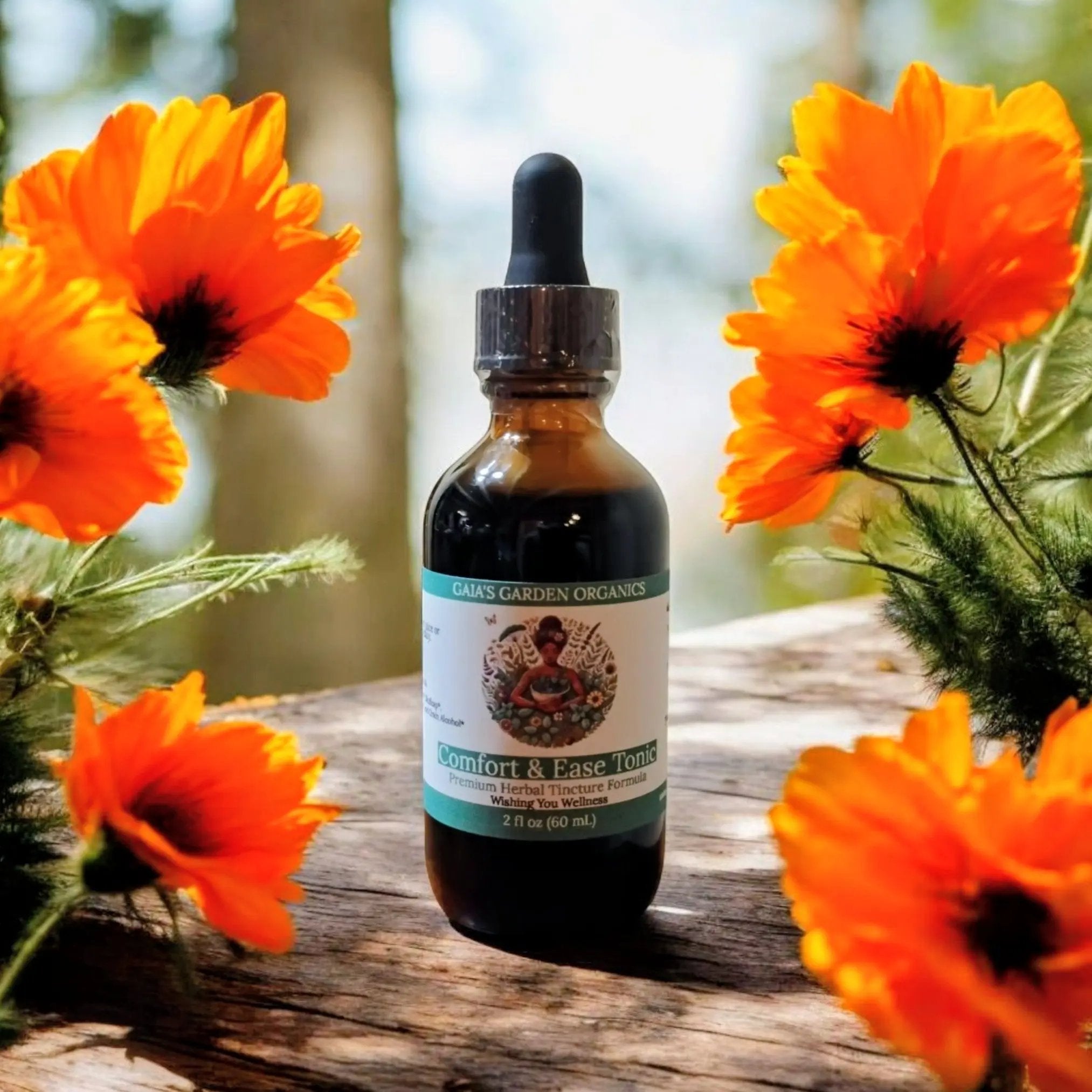
- Comfort & Ease Tonic — for muscle and joint ease after long days or workouts.
If you're new to tinctures and want a complete toolkit from day one, our Ultimate Calm Kit pairs a daytime nervine tonic with a bedtime tincture and a nervine tea — three formats covering the full daily stress cycle.
Frequently Asked Questions
How many drops of a herbal tincture should I take?
For a standard adult-strength tincture, 20 to 40 drops (about half to one full dropper), one to three times daily. Start at the lower end and work up over several days if needed. Always check the specific product label — some high-potency or strongly-acting blends use a smaller dose.
How do you take a herbal tincture under your tongue?
Squeeze the dropper into your mouth, under the tongue, hold for 30 seconds without swallowing, then swallow. Avoid food or drink for a minute or two before and after the dose for the cleanest sublingual absorption. Follow with a sip of water or tea if the taste is strong.
How long before I feel a tincture working?
Fast-acting tinctures (nervines, digestive bitters, acute stress blends) usually take effect within 15 to 30 minutes. Long-term tonic tinctures build over 2 to 6 weeks of consistent daily use.
Can I take tinctures with coffee or other supplements?
Yes, in almost all cases. The exception is if your tincture contains a plant with a known drug interaction (some immune blends interact with immunosuppressive medications, some liver-supporting blends interact with specific drugs). If you're on prescription medication, share your tincture label with your pharmacist or practitioner.
Why does my tincture taste so strong?
Bitter taste is a feature, not a flaw — it's the active plant constituents on your tongue. Bitter receptors in the mouth and gut are part of the mechanism for many digestive and nervine effects. You can dilute in water or tea, but don't be put off; the strength is a sign the plants are there.
Can children take herbal tinctures?
Many traditional children's blends are dosed at 1 to 5 drops per year of age, taken diluted in a small amount of warm water. Always consult your pediatrician for specific situations, and avoid alcohol-based tinctures for children under two without practitioner guidance.
Is it safe to take multiple tinctures at once?
Generally yes — herbalists have combined tinctures for centuries to address layered patterns. Start with one tincture for a week to confirm how your body responds to it, then layer in a second. For combinations addressing complex situations, a one-on-one consultation with a clinical herbalist is the safer move.
Next step
The best way to learn how your body responds to a tincture is to pick one that matches a pattern you're actually working with, commit to a 21-day course at the standard dose, and observe honestly. Don't judge it at day three. Don't skip days. Notice what shifts and what doesn't. Your body will tell you what's working, and you'll develop an instinct for your own best doses faster than a book can teach you.
Browse our full tincture collection, or explore the Ultimate Calm Kit if you want a complete starter set designed to work together.
Frequently asked
How many drops of a herbal tincture should I take?
For a standard adult-strength tincture, 20 to 40 drops (half to one full dropper), one to three times daily. Start at the lower end and work up over several days if needed. Always check the specific product label.
How do you take a herbal tincture under your tongue?
Squeeze the dropper into your mouth under the tongue, hold for 30 seconds without swallowing, then swallow. Avoid food or drink for a minute or two before and after for the cleanest sublingual absorption.
How long before I feel a tincture working?
Fast-acting tinctures (nervines, digestive bitters, acute stress blends) usually take effect within 15 to 30 minutes. Long-term tonic tinctures build over 2 to 6 weeks of consistent daily use.
Can I take tinctures with coffee or other supplements?
Yes in almost all cases. The exception is if your tincture contains a plant with a known drug interaction. If you are on prescription medication, share your tincture label with your pharmacist or practitioner.
Why does my tincture taste so strong?
Bitter taste is a feature — it is the active plant constituents on your tongue. Bitter receptors are part of the mechanism for many digestive and nervine effects. Dilute in water or tea if needed, but do not be put off.
Can children take herbal tinctures?
Many traditional children''s blends are dosed at 1 to 5 drops per year of age, taken diluted in warm water. Always consult your pediatrician, and avoid alcohol-based tinctures for children under two without practitioner guidance.
Is it safe to take multiple tinctures at once?
Generally yes — herbalists have combined tinctures for centuries. Start with one for a week to confirm your body''s response, then layer in a second. For complex combinations, consult a clinical herbalist.
Products from this article
Handcrafted in Umpire, Arkansas by Gaia Devi, clinical herbalist.
Explore our apothecary
Learn more
Flower Essences 101
A clinical herbalist's plain-English guide to what flower essences are and how to take them.
Find your match
Find your flower essence
9-question quiz matching your current emotional state to one of our five essences.
Shop the apothecary
Herbal Tinctures
Clinical weight-to-volume tinctures for nervous-system, sleep, and recovery work.