In this article (13)▾
Building a Home Apothecary: A Clinical Herbalist's Starter Kit
The five foundational remedies every home apothecary needs — what each one does, when to reach for it, and why these cover most of what daily life will throw at you.
This is the kit I build for friends, family, and new clients who want to start with something real rather than guessing between forty products. Each pick earns its spot for a specific reason: a specific symptom, a specific time of day, a specific type of pattern. I'll walk you through each one, why it's on the list, how to use it, and how the five fit together as a system.

The philosophy behind a starter apothecary
A good home apothecary isn't a shelf of thirty jars. It's a small, well-chosen set of remedies that each do a distinct job and together cover the most common work of a human body and mind. If you pick well, five is enough — more is helpful but not necessary.
The way I think about it: a complete kit needs to cover these five common patterns of human life:
- Acute nervous-system stress — the hard moments in the middle of a day.
- Sleep disruption — the nights when the body won't let go.
- Emotional weather — grief, overwhelm, self-doubt, the internal climate that isn't quite an illness but is shaping your days.
- Digestive and daily-tonic support — the slow, nourishing work of a regular tea practice.
- Seasonal immune resilience — the cold-weather months, a travel day, the overworked week.
A remedy for each — one tincture, one essence, one tea, and a few crossovers — and you're covered. Here's the kit.
Remedy #1 — A daytime nervine tincture
For acute stress, nervous tension, and the hard moment mid-day.
This is the remedy you'll reach for more than any other. Life puts stress into a person's day on no predictable schedule — a difficult email, a hard conversation, an afternoon of doomscrolling news, a small child melting down. A daytime nervine tincture is the tool that lets you respond rather than react. Twenty drops under the tongue, hold for thirty seconds, swallow. In ten to fifteen minutes, the sharp edge softens.
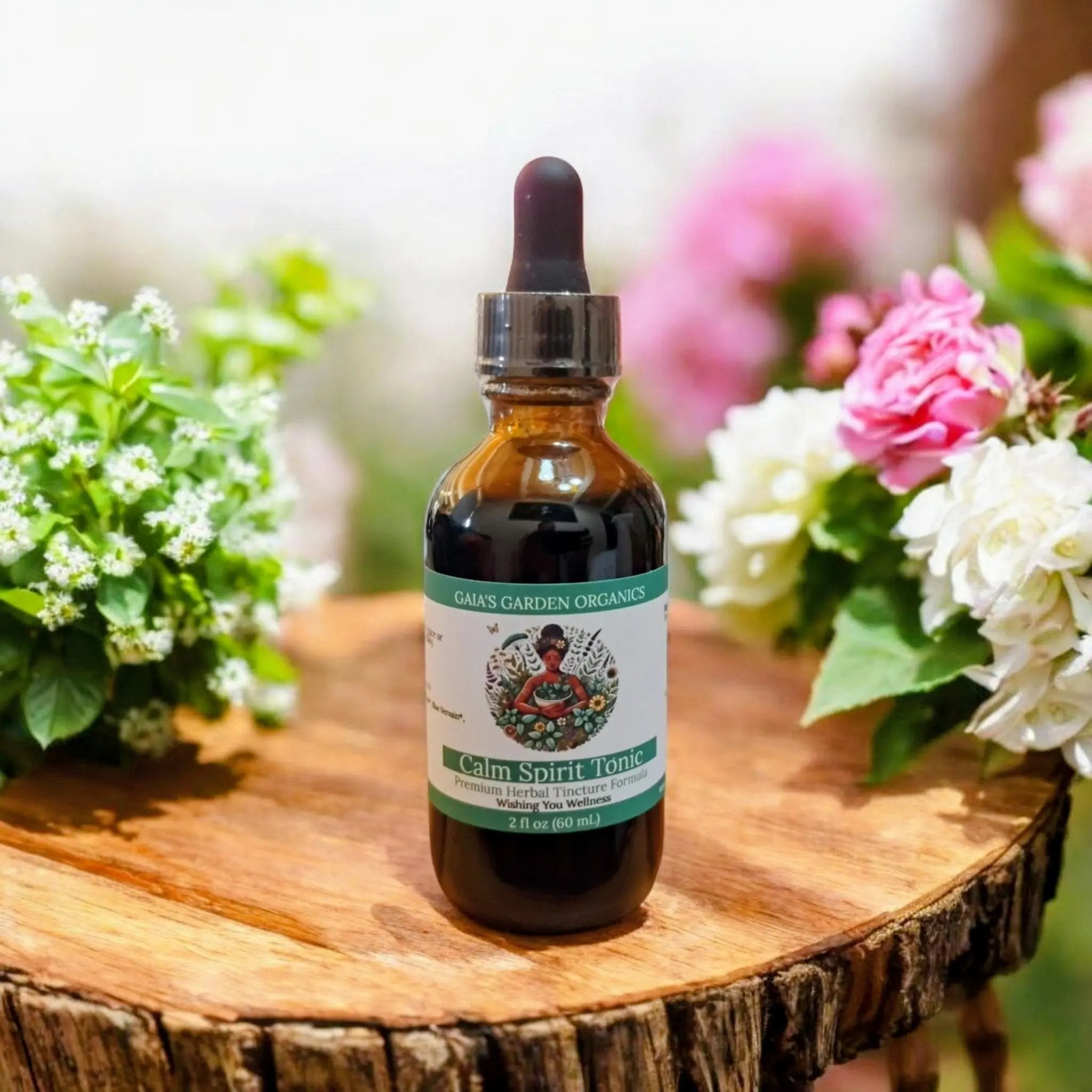
I recommend our Calm Spirit Tonic for this slot. It's a blend of traditional Western nervines designed to support the nervous system acutely without sedating you. Safe to keep in a purse, a glove box, or a desk drawer. Safe to take before a meeting. Safe at any time of day.
When you'll reach for it:
- Before a presentation, difficult conversation, or medical appointment.
- In the middle of an afternoon that's gotten away from you.
- After an emotional trigger, before the reaction cascades.
- As a daily preventive dose in the morning if you're in a high-stress chapter of life.
For the full how-to on dosing tinctures, see our guide to taking tinctures.
Remedy #2 — A bedtime sleep tincture
For the nights your body won't let go.
Sleep is the single most important intervention in human health, full stop. If sleep is reliable, most other problems are manageable. If sleep is not reliable, nothing else works as well. A good bedtime tincture is non-negotiable in a starter apothecary.
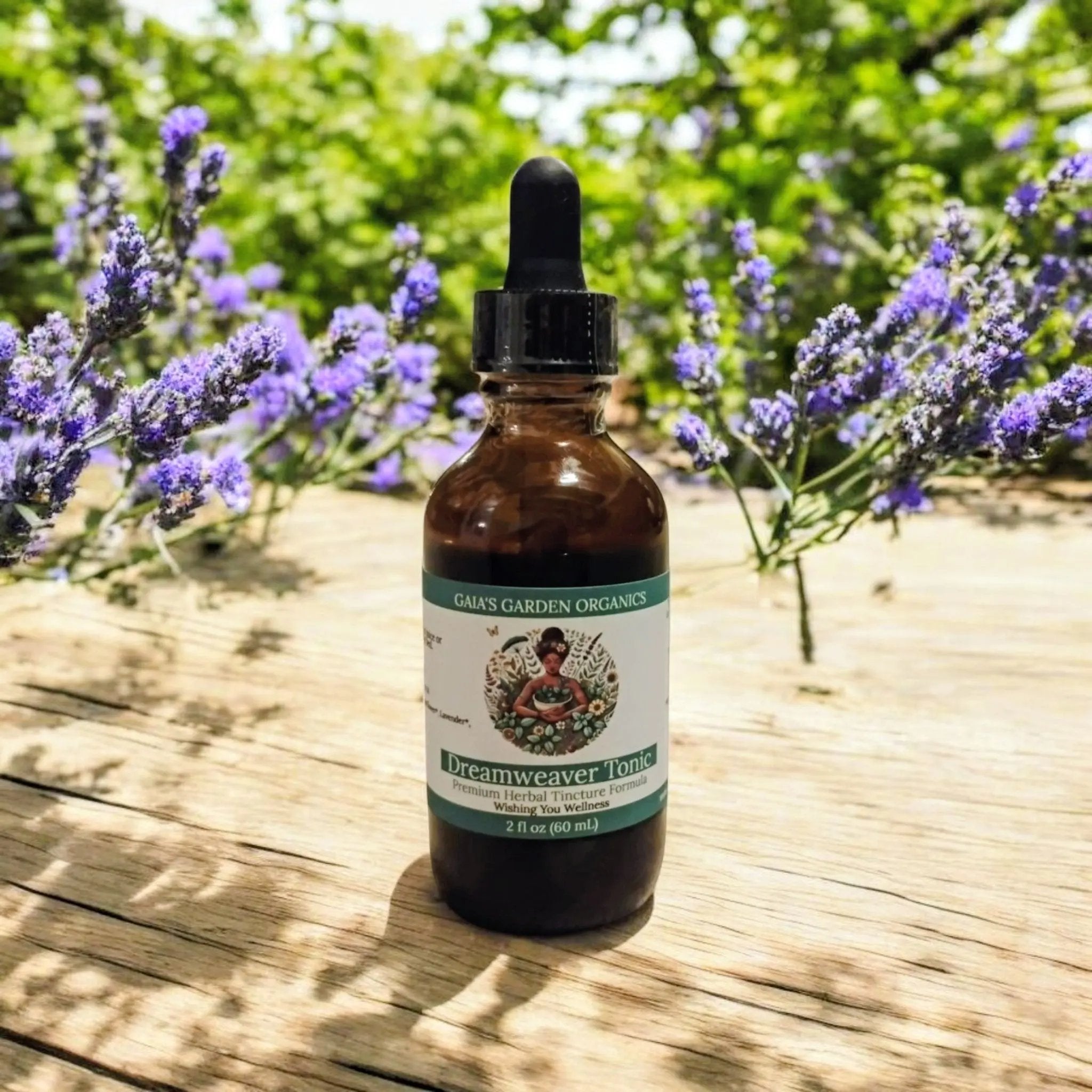
Our Dreamweaver Tonic is my default recommendation. Taken 30 minutes before lights-out, it signals the nervous system to down-shift. It's not a sedative in the pharmaceutical sense — it doesn't force you into unconsciousness. It gently lowers the barrier between awake and asleep, so your own body can cross on its own timing.
Use it:
- On nights you can feel sleep being difficult before you've even gone to bed.
- After a day of travel, time-zone change, or unusual excitement.
- During a chapter of life with ongoing stress where sleep is inconsistent.
- As a layered strategy alongside our Healing Hypnotic Tea for particularly difficult weeks.
For deeper background on the herbs in sleep tinctures, see our guide to tinctures for insomnia and racing thoughts.
Remedy #3 — A flower essence for your current emotional pattern
For the weather of the inside — the grief, the doubt, the overwhelm.
The third slot in a starter apothecary is different in character from the first two. It's not a physical remedy. It's an emotional remedy — a flower essence chosen to match the pattern of your inner life right now.
Flower essences work on a subtler layer than tinctures. They don't sedate, stimulate, or medicate. They shift emotional patterns — the habits of reaction and feeling that shape everyday life. A well-chosen essence, taken four times a day for three weeks, often does the work of months of talk therapy on a specific pattern.
The right essence depends on what you're working with. Here are the five we currently stock, each matched to a specific pattern:
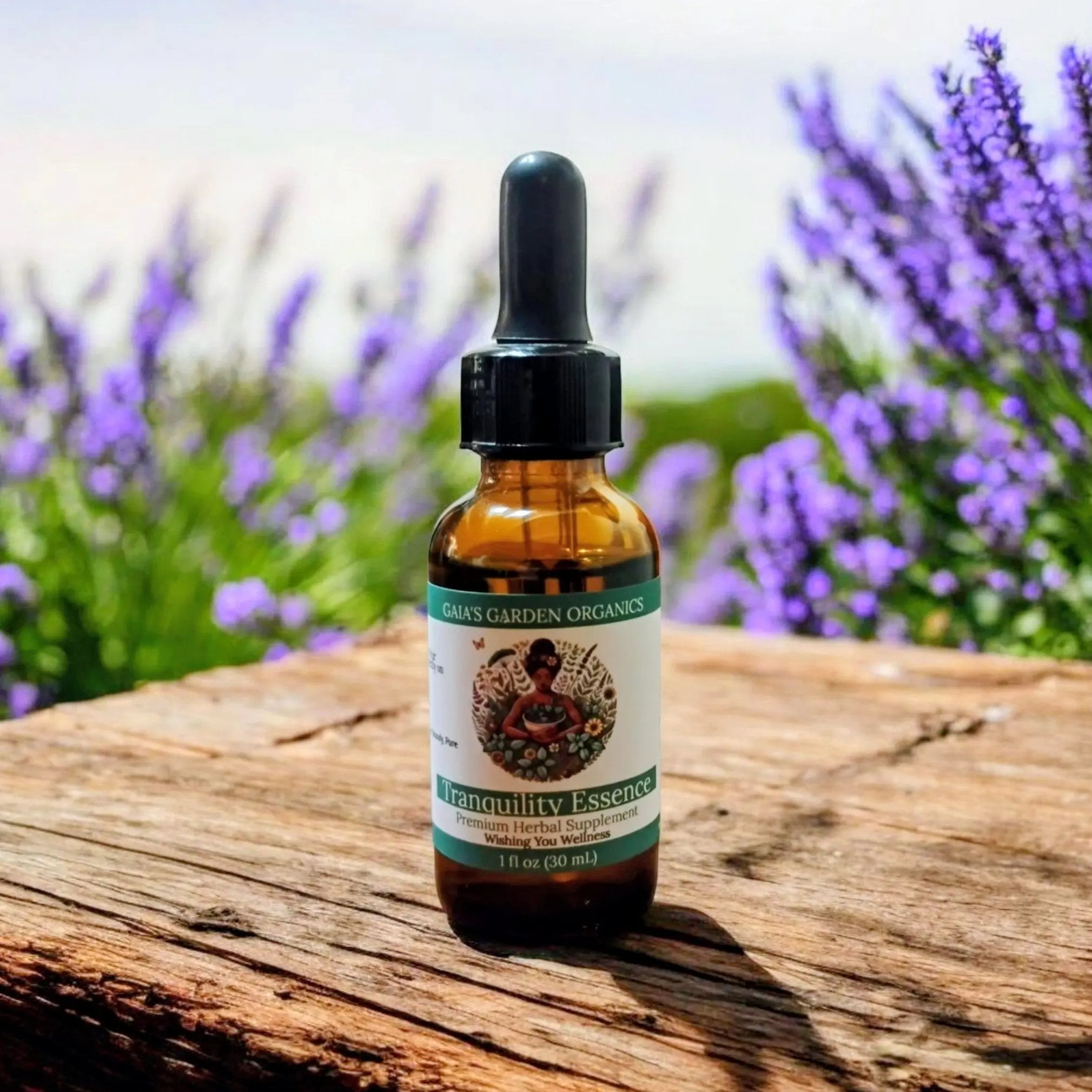
- Tranquility Essence (lavender) — for anxiety, over-thinking, and an overactive nervous system.
- Clarity Essence (peppermint) — for mental fog, indecision, and scattered focus.
- Confidence Essence (goldenrod) — for self-doubt, boundary difficulties, and shrinking in group settings.
- Heartful Essence (rose) — for grief, heartbreak, and the tender-hearted states that need holding.
- Vitality Essence (spearmint) — for renewed lightness after burnout or prolonged stress.
If you're not sure which one matches where you are right now, our two-minute essence quiz will walk you to the right one. Or, for a home apothecary built for the long haul, our Flower Essence Starter Set includes all five — so you can shift between them as life shifts under you. Most clients who build a complete home apothecary end up with the full five-essence set within their first year.
For more on how essences work and how long to take them, see our guide to how long flower essences take to work and the foundational piece on flower essences for emotional balance.
Remedy #4 — A daily tonic herbal tea
For the slow, nourishing background work.
A well-chosen tonic tea is the quiet medicine of a good apothecary. Unlike a tincture that you reach for in a specific moment, a tea is a practice — a daily hour of steam, warmth, and slow nourishment that supports baseline function over weeks and months.
Which tea belongs in your kit depends on what your body is asking for. My two most common recommendations:
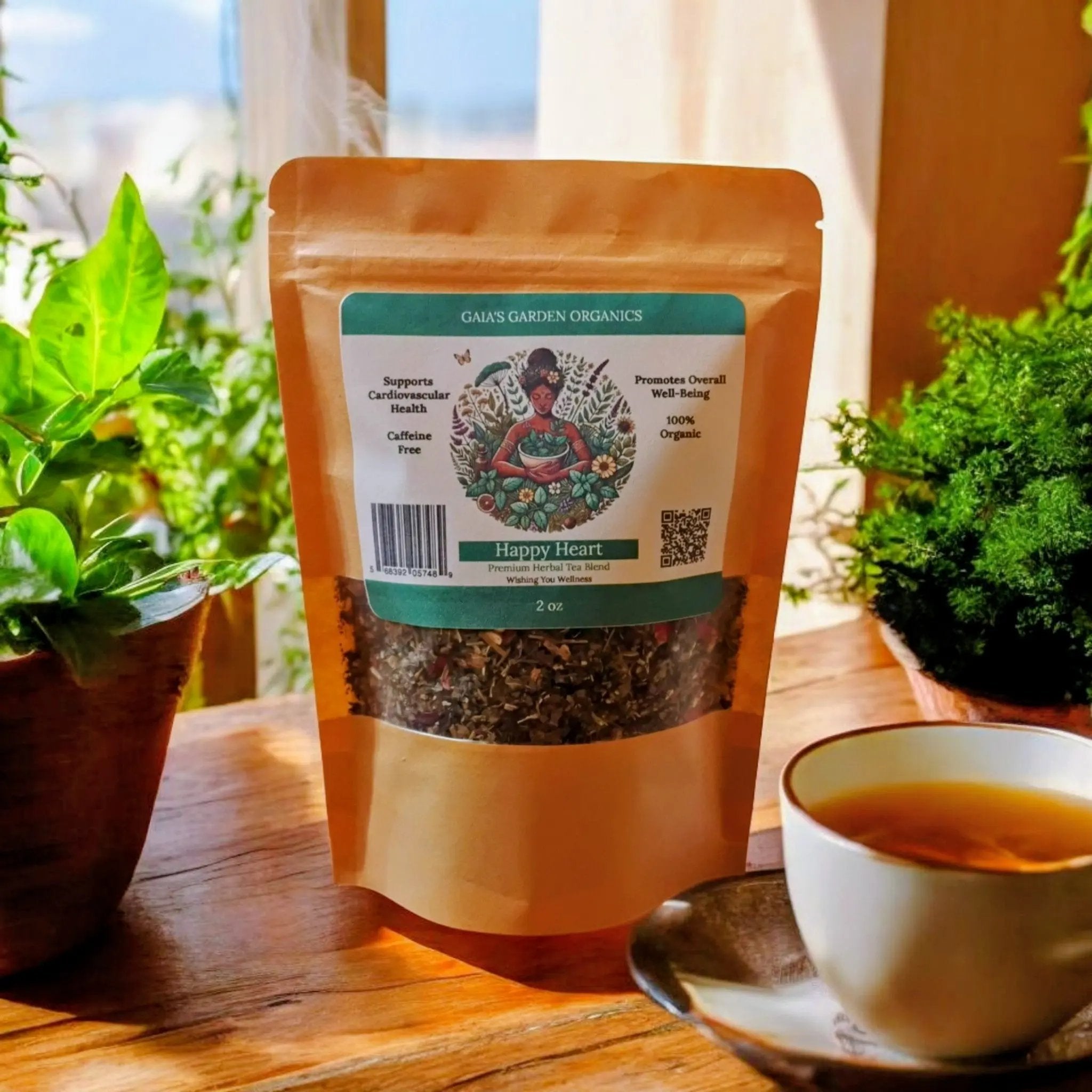
- Happy Heart Tea — if you're carrying emotional stress, processing grief, or want traditional cardiovascular-supportive herbs on a daily basis. Hawthorn, rose, and linden form the backbone of this blend.
- Magical Marvel Tea — if you want a general daily tonic for vitality and resilience, especially through a demanding chapter of life.
Pick one to start. Brew a cup or two each day, steeped covered for ten to fifteen minutes, and let it become a genuine daily habit. After six weeks you'll feel what it's been doing in the background — sleep slightly deeper, mood slightly more even, digestion slightly more reliable. Baseline work, not heroic action.
For a deeper discussion of tea's unique value — and when it's actually a better choice than a tincture — read our tea vs. tincture guide.
Remedy #5 — A seasonal immune tea or tincture
For the cool-weather months, travel days, and overworked weeks.
The fifth slot in a complete home apothecary is for immune support. This isn't a daily-tonic item — it's a blend you pull out when you need it: the first scratch of a sore throat, the day you get on a plane, the week when everyone around you is coming down with something, the long run of sleepless nights that leaves your resilience thin.
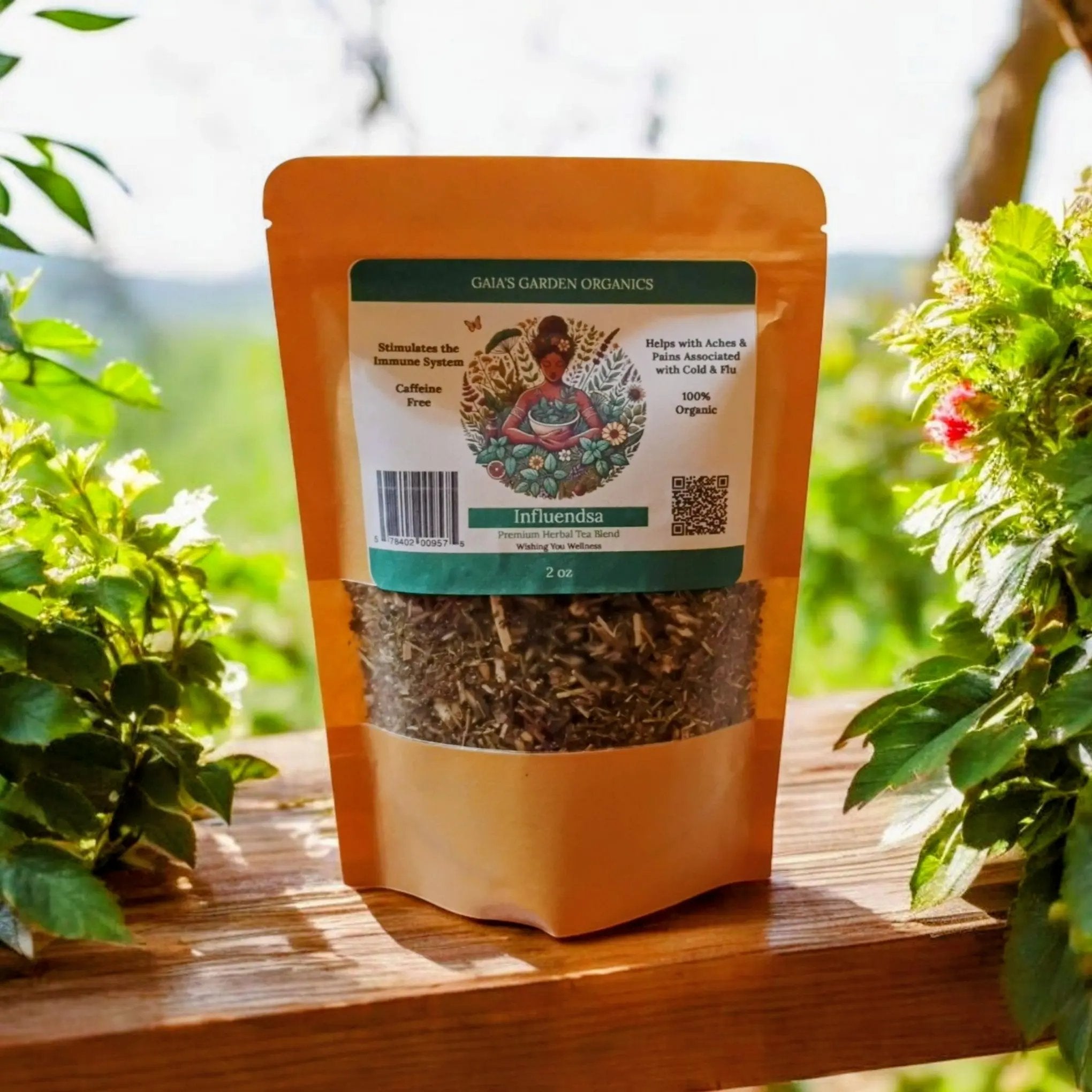
I recommend our Flu Fighter Tea or Breathe Better Tea for this slot, depending on whether your vulnerability tends to run systemic or respiratory. Both are traditional, warming, and made to be taken in concentrated frequency when you need them — three cups a day for a handful of days, rather than a single cup every day forever.
If you prefer a tincture format for acute immune support, the Seasonal Wellness Bundle pairs all three of our immune teas at a bundle price and is the most complete single-purchase way to stock this part of the kit.
How the five work together
These aren't five unrelated products. They're five tools for five distinct parts of daily life, and they fit together like this:
| When | What you reach for |
|---|---|
| Morning, any day | A small dose of your essence; a cup of the daily tea if time allows. |
| Stressful moment mid-day | Daytime nervine tincture (Calm Spirit). |
| Afternoon slump | A second cup of daily tonic tea. |
| Emotional wave | Another dose of your current essence. |
| 30 minutes before bed | Sleep tincture (Dreamweaver Tonic). |
| First sign of a cold | Immune tea, three cups a day, and rest. |
| A grief or stuck pattern that's lasted months | Commit to a 21-day essence course, plus tea practice. |
| Travel day | Immune tincture in the morning, daytime nervine as needed, sleep tincture on arrival. |
That's a complete system, built from five remedies. It covers acute moments, daily rituals, emotional weather, and seasonal reality. Most of what life will ask of you in a typical week can be met from this kit.
What's not on this list — and why
A few things you might expect in a starter kit that aren't here:
- Capsules and pills. I'm a traditional-preparations herbalist. Teas, tinctures, and essences are the three formats that have served human health for centuries and that I have the most confidence in.
- A long list of single-herb extracts. A well-built blend often does what multiple single herbs would do — and most home users don't have the clinical training to combine single-herb extracts into coherent formulas. Start with thoughtful blends.
- Anything marketed for a single diagnosis. A home apothecary should support patterns, not chase symptoms. Keep prescription medicine for diagnosed conditions; keep your apothecary for resilience, rhythm, and everyday support.
- CBD and cannabis products. These are their own category with their own considerations. They aren't part of the traditional herbal apothecary I teach, and they aren't part of what we make.
The easiest way to build the full kit
If you want to assemble a complete home apothecary in one order, here's the shortest path:
- Flower Essence Starter Set — covers remedy #3 completely, with all five essences.
- Ultimate Calm Kit — covers remedies #1, #2, and a nervine tea in one bundle (Calm Spirit Tonic + Dreamweaver Tonic + Healing Hypnotic Tea).
- Happy Heart Tea or Magical Marvel Tea — your choice of daily tonic tea (remedy #4).
- Seasonal Wellness Bundle — covers remedy #5 for the whole cold-weather season.
Those four purchases give you a complete five-category apothecary with significant bundle savings, and you'll have every one of the remedies described in this guide on your shelf the day it arrives.
If budget is a constraint, start with the Ultimate Calm Kit and the Flower Essence Starter Set — that covers most of the essential ground, and you can layer in the daily tonic tea and seasonal blend as the months unfold.
How to care for your apothecary
A few practical notes for keeping the kit in good condition:
- Store everything out of direct sunlight. A closed cabinet or drawer is ideal. Amber glass helps, but UV still degrades plant compounds over time.
- Keep teas sealed and labeled with date. Loose-leaf teas hold their potency for 12 to 18 months; write the purchase date on the jar when you open it.
- Shake tinctures before use. A little sediment is normal and means the plant is still present.
- Don't refrigerate essences or tinctures. Room temperature is perfect; cold storage can cause alcohol-water separation.
- Replace anything that smells or tastes off. Rare, but worth a quick sniff check every few months.
Frequently Asked Questions
What should be in a beginner herbalism kit?
At minimum: a daytime nervine tincture (for acute stress), a bedtime sleep tincture (for sleep support), a flower essence matched to your current emotional pattern, a daily tonic herbal tea, and a seasonal immune blend. Five remedies, each covering a distinct category.
Is it safe to keep multiple herbal remedies at home?
Yes. Traditional herbal remedies prepared properly — tinctures, teas, and flower essences — are safe to store and use at home. Keep them out of reach of small children, read labels for specific contraindications (pregnancy, certain medications), and consult a practitioner if you're layering multiple tinctures for a specific goal.
How long does a home apothecary last before restocking?
Tinctures: 3 to 5 years unopened. Flower essences: 5 to 10 years unopened. Dried teas: 12 to 18 months for peak potency. Most home users will need to replenish their tea supply once or twice a year; tinctures and essences last considerably longer.
Can I make my own tinctures at home instead of buying them?
You can — home tincture-making is a beautiful practice, and I encourage it for anyone who wants to learn. But a well-made clinical-ratio tincture from a trained herbalist uses plants at peak potency, with a tested ratio, at a standard alcohol percentage — and for most people beginning their apothecary, starting with reliable bottles and learning to make your own later is the gentler path. Our simple home remedies guide has beginner-friendly recipes.
What if I'm pregnant or nursing — is this kit safe?
Some herbs in common apothecary blends are not recommended during pregnancy or while nursing. If you're pregnant, nursing, or trying to conceive, please consult your healthcare practitioner before starting any herbal tincture or tea. Flower essences are generally considered safe in pregnancy due to their vibrational (not chemical) nature, but a quick check with your provider is wise. For postpartum support specifically, see our dedicated postpartum herbal support page.
What's the difference between this kit and a pharmacy's first-aid kit?
Different tools for different jobs. A pharmacy first-aid kit is for acute injury and diagnosis — cuts, fevers, diagnosed conditions, prescription medications. A home apothecary is for resilience and pattern-support — stress, sleep, emotional weather, daily tonics. The two sit side by side; they don't replace each other.
A final thought
A home apothecary isn't a purchase — it's a relationship. The remedies on the shelf become useful through use: you'll learn over months which one fits a particular kind of afternoon, which one's right for your particular body at bedtime, which essence handles the specific texture of your grief. No article, no quiz, no guide can teach you that. Only the daily, honest use of the tools can.
Start with the five. Use them. Watch your own patterns. After six months, you'll have your own instinct for the kit and your own reasons for what you keep on the shelf. That's when a home apothecary stops being a collection and starts being medicine.
Explore the full apothecary, or start building the kit with our Flower Essence Starter Set and Ultimate Calm Kit — the two foundational bundles in this guide.
Frequently asked
What should be in a beginner herbalism kit?
At minimum: a daytime nervine tincture for acute stress, a bedtime sleep tincture, a flower essence matched to your current emotional pattern, a daily tonic herbal tea, and a seasonal immune blend. Five remedies, each covering a distinct category.
Is it safe to keep multiple herbal remedies at home?
Yes. Traditional herbal remedies prepared properly are safe to store and use at home. Keep them out of reach of small children, read labels for specific contraindications, and consult a practitioner if layering multiple tinctures for a specific goal.
How long does a home apothecary last before restocking?
Tinctures: 3 to 5 years unopened. Flower essences: 5 to 10 years unopened. Dried teas: 12 to 18 months for peak potency. Most home users replenish tea twice a year; tinctures and essences last considerably longer.
Can I make my own tinctures instead of buying them?
You can, and home tincture-making is a beautiful practice. But a well-made clinical-ratio tincture from a trained herbalist uses peak-potency plants at a standard alcohol percentage — and for most people starting out, reliable bottles are the gentler path.
What if I''m pregnant or nursing — is this kit safe?
Some herbs in common apothecary blends are not recommended during pregnancy or nursing. Consult your healthcare practitioner before starting any herbal tincture or tea. Flower essences are generally considered safe due to their vibrational nature, but check with your provider.
What''s the difference between this kit and a pharmacy first-aid kit?
Different tools for different jobs. A pharmacy first-aid kit is for acute injury and diagnosed conditions. A home apothecary is for resilience and pattern support — stress, sleep, emotional weather, daily tonics. They sit side by side.
Products from this article
Handcrafted in Umpire, Arkansas by Gaia Devi, clinical herbalist.
 New
NewGaia's Tranquility Essence - Organic Lavender Flower Essence
for stress & anxious hearts
 New
NewGaia's Calm Spirit Tonic
for calm and a quiet mind
 New
NewGaia's Dreamweaver Tonic
for slipping into sleep
 New
NewGaia's Happy Heart Herbal Tea
for heart-centered comfort
 NewSold out
Gaia's Flu Fighter Herbal Tea
for seasonal wellness
Explore our apothecary
Learn more
Flower Essences 101
A clinical herbalist's plain-English guide to what flower essences are and how to take them.
Find your match
Find your flower essence
9-question quiz matching your current emotional state to one of our five essences.
Shop the apothecary
Shop the apothecary
Every flower essence, tincture, and tea on our shelves — clinical-grade plant medicine, seed-to-bottle.